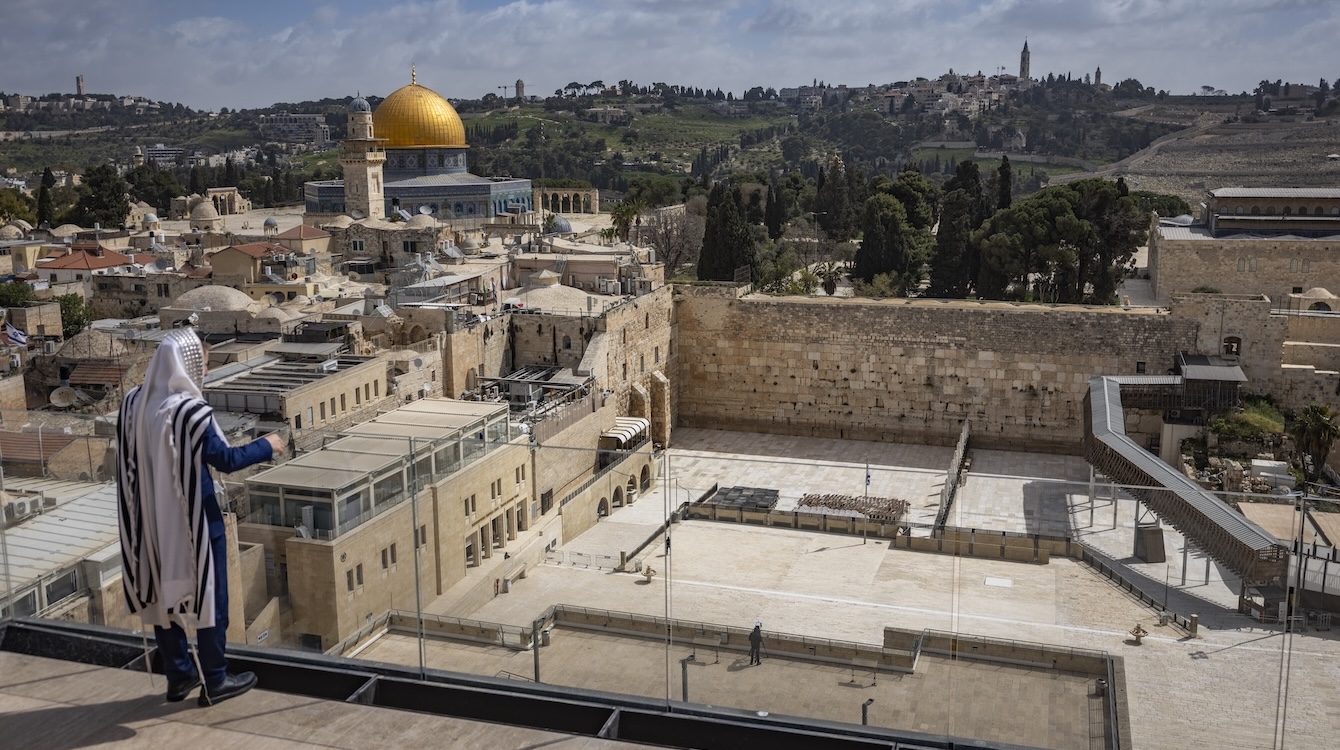
Tisha B’av—Mourning for the Destruction of the Temple
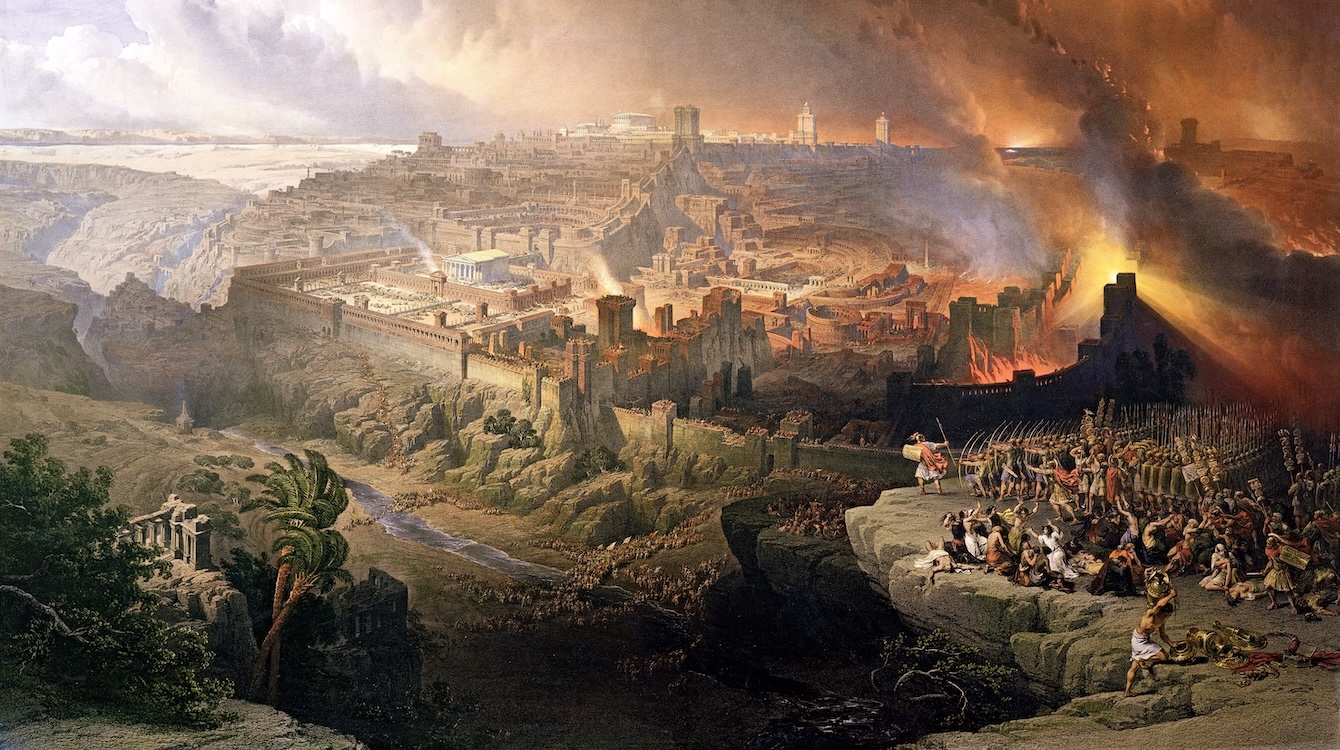 The Siege and Destruction of Jerusalem by the Romans Under the Command of Titus, A.D. 70.
Oil on canvas by David Roberts | Source: WikimediaCommons
The Siege and Destruction of Jerusalem by the Romans Under the Command of Titus, A.D. 70.
Oil on canvas by David Roberts | Source: WikimediaCommons
A year ago I wrote: “It is a day that receives great attention in Jewish tradition but is unknown in Christian tradition, the 9th (Hebrew: tisha) of the Hebrew month of Av. Christians do not commemorate the destruction of the temple in Jerusalem.”
9 Av is the day commemorating the destruction of both the first and second temples. This is done by fasting for a day (like Yom Kippur from evening to evening). In the synagogue, the book of Lamentations is read, which sings of Jerusalem destroyed by the Babylonians.
“9 Av is the day commemorating the destruction of both the first and second temples”
How should I, as a Christian, from a Christian viewpoint, reflect on Tisha B’Av and the destruction of the Temple? I first try to listen again to a Jewish voice. In his book The Jewish Way; Living the Holidays (1988), Rabbi Irving Greenberg reflects on the impact of the destruction of the Temple and the responses to it. The loss of the Temple caused a change in Jewish religion. The destruction of the Temple was not the end of Judaism, “it could only mean a call to serve God in a new way”, rabbi Greenberg writes. The two answers were rabbinic Judaism and the rise of Christianity. Rabbi Yochanan ben Zakkai escaped Jerusalem to set up the study house in Yavne (Yamnia), where eventually the canon of the Hebrew Bible was finally decided on. The focus shifted from the sacramental service of the priests to the priestly service of the Jewish people. The daily prayers of the community and the individual, accompanied by acts of loving kindness, replaced the sacrifices in the Temple, including their atoning power. In a sense, Jewish worship was secularised (as rabbi Greenberg puts it) and popularised. Secularised, because the focus no longer could be the presence of God in the temple, but finding God and serving Him in every aspect of daily life—a secularisation that paradoxically leads to the sanctification of life. Rabbi Greenberg calls this shift from priests to people a renewal of the covenant: now, the covenant people became fully responsible as covenant partner.
Christians—that is to say, the Christian authors whose writings have survived— could not or would not go along with that. Early in Christian tradition, the destruction of the temple was seen as evidence of God’s final judgement on Israel. Yet, as Greenberg observes, the early Christians were using traditional Jewish categories in their response.
They accepted the events of Jewish history as normative. But once they perceived the Destruction as a sign of the end of the Jewish covenant, the logic of the new situation turned them to a new road. “Rejecting some Jewish beliefs, spiritualising the old promises by transferring their focus from the land and people of Israel to personal salvation, yet preaching the basic religious love and consolation of Judaism to the world, they created Christianity.”
“The Talmud teaches that the Temple was destroyed because the people were driven by baseless hatred”
On the other hand, historians such as Daniel Boyarin today say that in practice, even until the fourth century, the dividing lines were not that sharp. There was much more interaction between Christians and Jews, than the religious leaders deemed desirable.
Rabbi Greenberg called the Jewish reaction the ‘paradigm of response’. That is a main characteristic of Judaism. How do we respond, as Christians?
I listen again to Jewish tradition. The temple was destroyed, it is taught in the Talmud, because the people were driven by baseless hatred. How is that with us? How much baseless hatred towards Judaism has there been in Christianity? How much baseless hatred exists still today, even among Christians themselves?
Jesus taught the fully Jewish, i.e. Biblical, principle of loving each other. That should also guide our relationship with Jewish people. Did He announce God’s final judgement over Jerusalem? There is certainly an element of judgement in His speech: “Look, your house is left to you desolate” (Matthew 23:38), but that is not the final word. There is an ‘until’: “For I tell you, you will not see me again until you say, ‘Blessed is he who comes in the name of the Lord” (verse 39). When Messiah comes in glory, Israel will return and the ‘House’ (the temple) will be filled again with the Glory of the Lord.

Why Israel? by Rev. Willem Glashouwer
Order the book