In Jerusalem, Second Hakafot bring joy, memory and Jewish unity to the streets

The Torah scrolls came out, the music began, and the dancing quickly took over.
Across Jerusalem on Saturday night, thousands gathered for Hakafot Shniyot—“Second Hakafot,” festive dancing with Torah scrolls traditionally held in Israel on the night following Simchat Torah. Neighborhoods throughout the city hosted celebrations, along with large public gatherings at the First Station, the Western Wall Plaza and Liberty Bell Park.
Three years after Oct. 7, the celebrations carried both the exuberance of Simchat Torah and an unmistakable awareness of what the holiday has come to mean.
At Liberty Bell Park, a Jerusalem tradition dating back decades brought together young people, families, rabbis, community leaders and public officials. At the event hall David Castle, another celebration brought together survivors of the Supernova music festival, many of whom have embraced Shabbat and Torah observance since Oct. 7.
At both events, the speeches were short and meaningful.
Dancing for joy and destiny
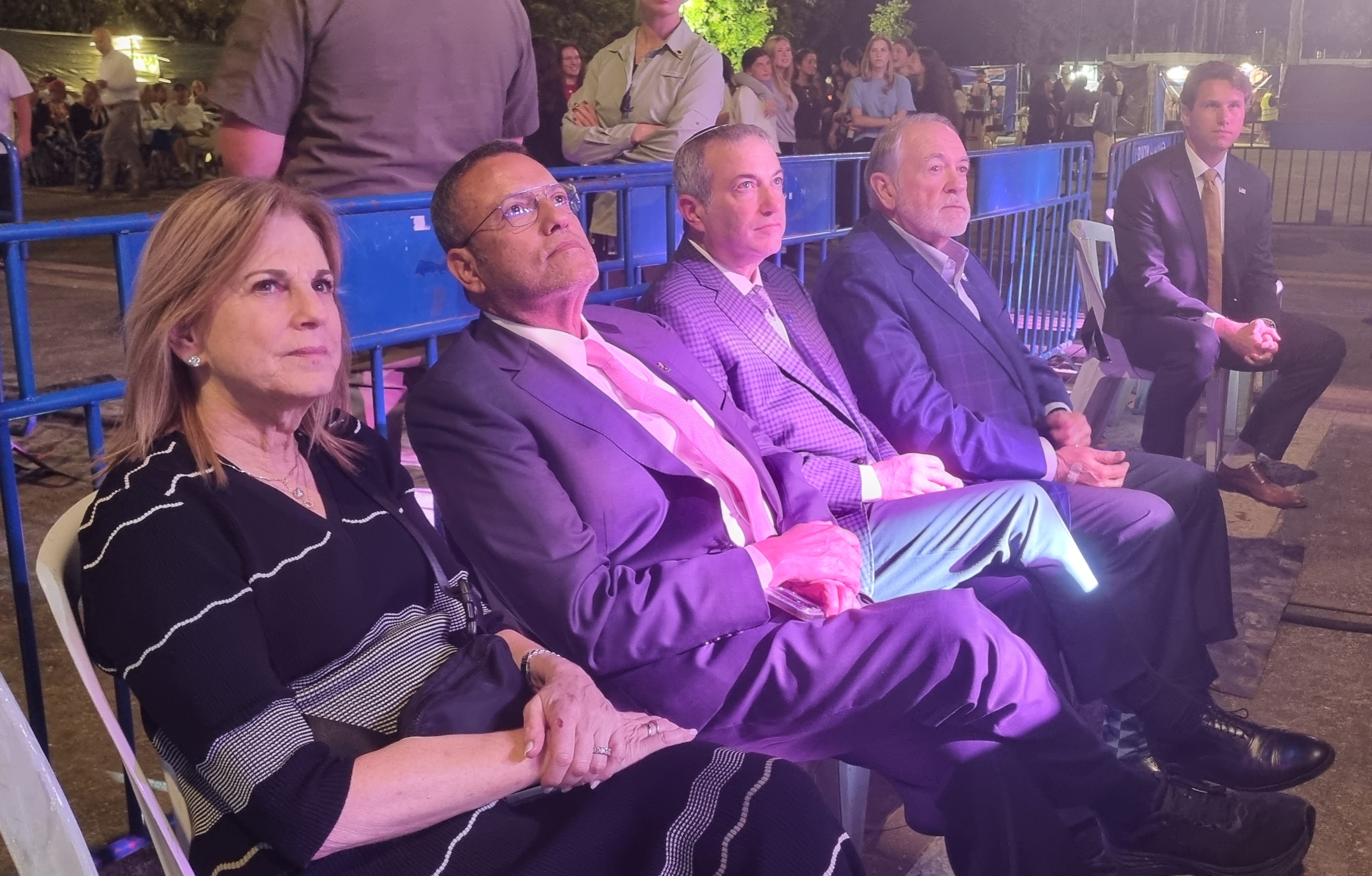
The Liberty Bell Park Hakafot Shniyot began in 1982 and has become a Jerusalem tradition. This year’s celebration was sponsored by Barbara and Alan Weichselbaum of New York and organized with the Jerusalem Great Synagogue and the Bnei Akiva youth movement, in loving memory of Gisella Jean and Eugen Gluck, who had sponsored the community Hakafot in the park in previous years.
The Glucks, Holocaust survivors who became successful American entrepreneurs, devoted their lives to philanthropy, supporting Jewish continuity, education and Holocaust remembrance. They were recognized among Yad Vashem’s institutional trustees.
Minutes before the program began, Barbara Weichselbaum, surrounded by her children, told JNS that she intended to continue the tradition her parents started.
“We want to keep it going,” she said.
U.S. Ambassador to Israel Mike Huckabee, Rabbi Ari Berman, president of Yeshiva University, and Jerusalem Mayor Moshe Lion were among the featured guests.
The speakers found it difficult to present their brief remarks; however, they continued smiling. Young men eager to begin dancing repeatedly interrupted the remarks by singing Hebrew songs.
Berman told JNS that Jerusalem’s celebration represented something deeper than simply dancing.
“In Jerusalem, there are two dances—we dance for joy and destiny,” he said. “Tonight we dance for destiny; these young men and women, everyone here, is on a mission to defend Israel and fight for justice and truth. That is why we are celebrating a chance to meet our destiny.”
When asked why he was at the event, Huckabee said that he knew Eugen Gluck in New York and remembered him as “one of the most amazing people,” describing him as generous and humble.
“When I heard he had anything to do with this, I said, ‘I’m all in,’” Huckabee told JNS.
Huckabee also told of bringing his daughter to Yad Vashem when she was 11 and more recently bringing his 13-year-old granddaughter. The visits, he said, were part of ensuring that the next generation understands the importance of Jewish history and remembrance.
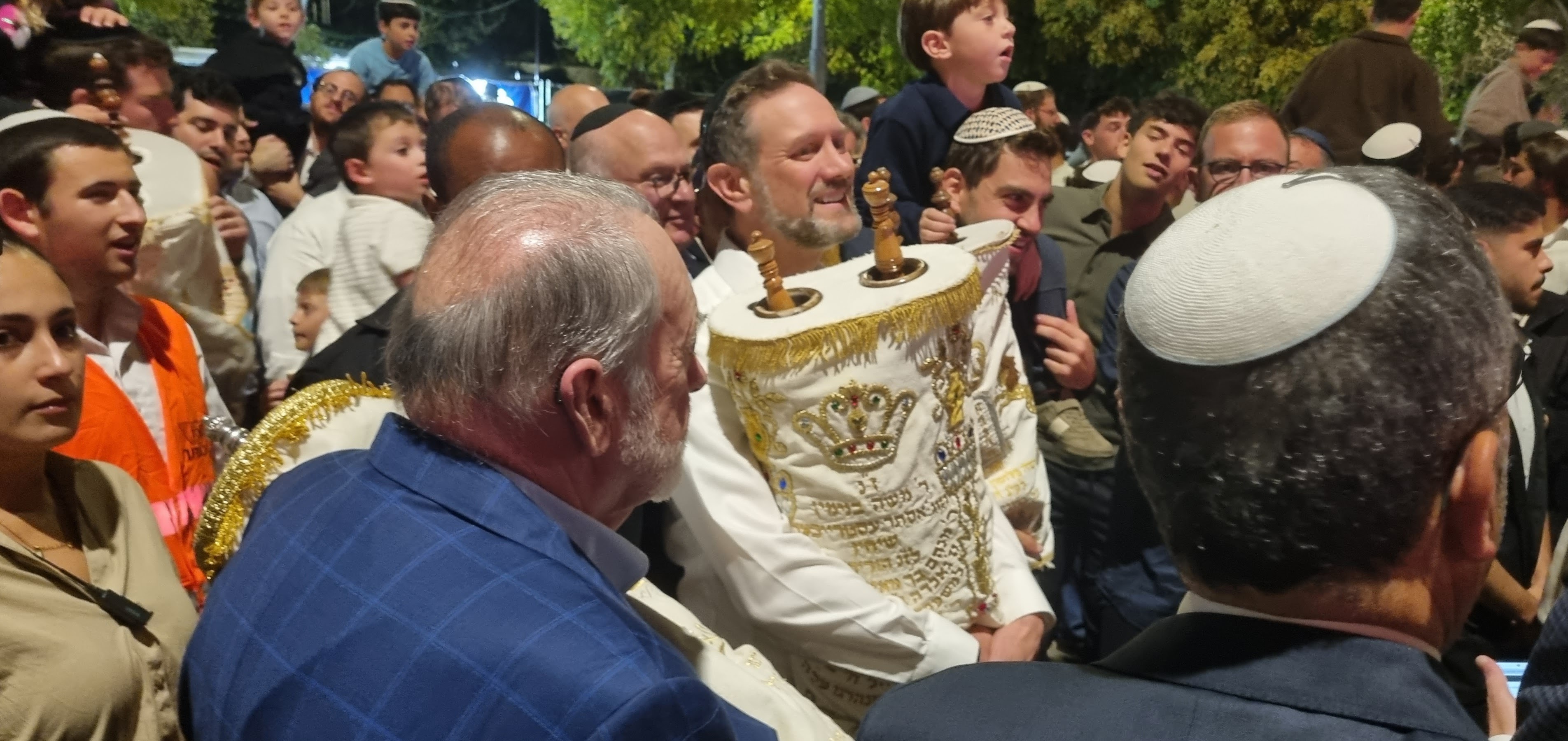
When the dancing finally began, Lion, Huckabee, Berman and representatives of Bnei Akiva and the Great Synagogue were called forward to participate in the first Hakafa.
The Torah scrolls were lifted.
The circles formed.
And the speeches were over.
‘We will dance again’
At the David Castle, the dancing carried a very different history.
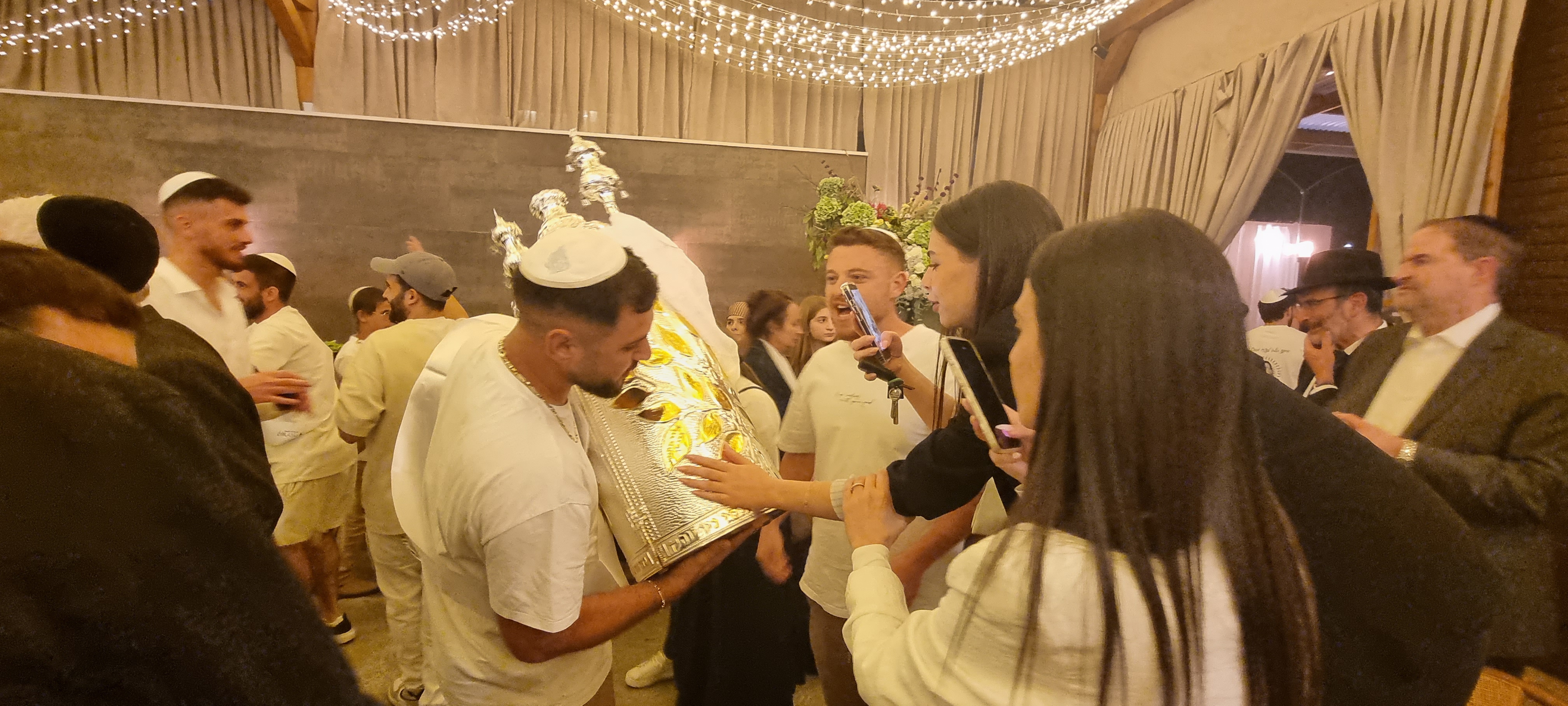
Kesher Yehudi hosted a celebration for survivors of the Supernova music festival, bringing together people from secular and religious backgrounds through a program built around relationships, Jewish identity, and long-term friendship.
Kesher Yehudi’s approach is based on creating intentional connections between Jews from different backgrounds and building friendships based on mutual respect and understanding. The organization is a recipient of the Jerusalem Unity Prize.
The Hakafot celebration was sponsored by Shmuel Rieder of Monsey, N.Y., who traveled from the United States to attend. Jerusalem Sephardi Chief Rabbi Shlomo Amar and former Chief Ashkenazi Rabbi of Israel David Lau offered blessings to the jubilant crowd.
Again, the speeches were brief.
The music was loud.
And the dancing was enthusiastic.
For the Supernova survivors, however, the Torah scrolls represented something more than a holiday celebration.
Last year, 30 Nova survivors participated. This year, another group of 30 joined, with plans for the initiative to grow again next year.
Each participant has become Shabbat observant and dedicates his portion in the Torah to a friend who was killed at the music festival.
Young people in the crowd took out their phones to photograph their friend’s name engraved in gold leaf on the metal case used by Sefardim to hold the Torah scroll upright when reading.
White-sashed participants were proclaimed the new “Shabbat heroes.”
Other banners carried photographs and names of friends who were killed on Oct. 7, reminders that even in the middle of the joyous celebration, those who died remain part of the story.
The crowd erupted when singer Yonatan Razel, who was hospitalized in June after suffering a brain hemorrhage, appeared briefly on stage. Razel, who has attended most of the Kesher Yehudi events over the past three years, was well enough to participate and sing one song.
For those gathered, his appearance added another emotional layer to an evening filled with music, memory and renewal.
Tzili Schneider, founder of Kesher Yehudi, has worked to make Jewish unity more than a slogan. “If each of us here today makes a serious, strong and authentic connection with another Jew in Israel who is completely different, I guarantee you that another Oct. 7 cannot happen,” she said. “We must show the Holy One, blessed be He, that his children truly love each other, no matter our differences.”
Miriam Tatarka, visiting from Australia, told JNS that “Seeing Nova survivors reclaim their Jewish heritage and celebrating it together with Jews from every sector was a powerful expression of unity—a reminder that our shared heritage is greater than our differences.”
The dancing continued
Leaving the David Castle shortly after midnight, the celebration was far from over. People were still arriving, while Jerusalem’s streets remained filled with families heading toward other Hakafot.
A father from Jerusalem who had brought his young children to Liberty Bell Park said that it was only their first stop of the night. He planned to take them to additional celebrations around the city.
The Western Wall Plaza had its own large Hakafot Shniyot gathering, with music, singers and numerous Torah scrolls. Other celebrations continued in neighborhoods throughout the capital.
The night was a reminder that there is no single way to celebrate Simchat Torah in Jerusalem.
There was the inherited tradition of families who have returned to the same celebration for decades.
There were young people impatient to dance before the speeches had ended.
There were parents taking children from one Hakafot to another.
And there were Nova survivors, dancing with the memory of friends they lost and with a Jewish identity they had chosen to reclaim.
One banner at the Kesher Yehudi celebration captured the balance of the evening:
“Forever in our hearts, with us everywhere.”
They danced again.
And in Jerusalem, they danced together.
Why Israel? by Rev. Willem Glashouwer
Order the book