Iranian infrastructure fair game to hit but question whether it’s smart, former US military official says

The decision whether to attack Iranian infrastructure is less a legal question than one of whether it’s a “smart target,” according to Lt. Gen. Thomas Trask (ret.), former vice commander of U.S. Special Operations Command.
“It’s easy to make the legal case of why you’re striking a power plant,” Trask said on a Jewish Institute for National Security of America webinar on Tuesday, as U.S. President Donald Trump has threatened to destroy civilian infrastructure in Iran.
Trask cited an example of a power plant that supplies power to Fayetteville, N.C., and to Fort Bragg, an army installation outside the city.
“That becomes pretty easy to make a case that that’s a legal military target,” Trask said on the webinar. “Now the question becomes more in the gray. What’s the situation that you want to leave afterwards? Do you want to have a situation where you’re creating another generation that may be against you for the small military gain by knocking out certain civilian infrastructure targets?”
Israel and the United States, which are hoping to rally the Iranian people to take the regime down, “don’t want to make enemies of those people, who have already demonstrated the capability to risk their lives to try to overthrow their own government,” Trask said.
Trask said that Washington and Jerusalem are focused on a “second level of targets” beyond Iran’s nuclear infrastructure.
Last weekend, Israel struck Iran’s biochemical sector, which “is directly related to supporting the development of weapons that have been used to support Hezbollah, Hamas, the Houthis around the proxies that the Iranians have been supporting for years,” Trask said. “It looks like an industrial target, but it’s directly related to military capability.”
The targets also include “barracks, training facilities, equipment and vehicles” that, when destroyed, “would make Iran less of a threat to its neighbors afterward,” he said.
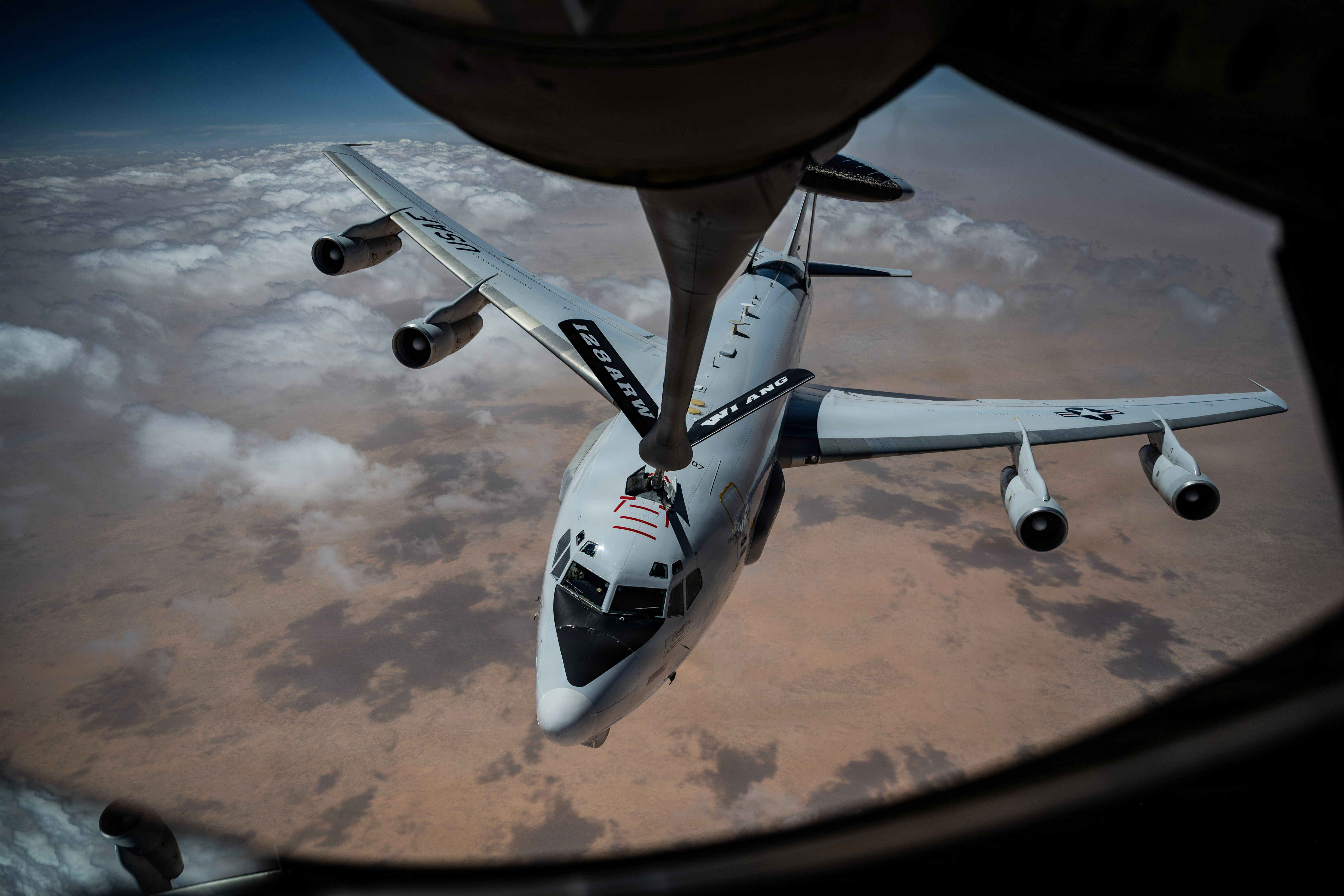
Trump is also reportedly weighing whether to launch ground operations inside Iran, beyond the daring rescue missions over the weekend to retrieve a pair of downed pilots.
But not all ground operations are the same, according to Trask.
“You can go in and control a small amount of territory for a short period of time with a relatively small force in a relatively quick and efficient manner,” he said. There are also “other objectives that you could accomplish by doing that in parts of the country that would be very achievable for us to do,” he said.
A raid is very different from an invasion with permanent forces, which would have to take control of parts of Iran to reopen the blockaded Strait of Hormuz, he said.
“That would be a lot more difficult. It would take a lot more logistics,” Trask said. “It would involve much heavier forces, with the ability to supply them by air.”
Many are questioning the Trump administration’s claims of “air superiority” over Iran, given that an F-15 was shot down over the weekend.
Israeli Maj. Gen. (ret.) Amikam Norkin, a former Israeli Air Force commander and JINSA distinguished fellow, said on the webinar that the term “air superiority” can be misunderstood.
“It means that you can fly and do your mission above the enemy territory, but it does not mean that it’s 100% safe,” he said. “There are still air defense systems spread around the bases.”
“It’s very hard to find them, so we must take an assumption that there is a threat,” the retired Israeli official said. “There is no zero threat.”
Norkin noted that trucks can transport shoulder-fired, surface-to-air guided missile systems, and a high-powered rifle can be used to pick off low-flying targets.
“It’s almost impossible to ever eliminate that,” he said.
Questions remain about how the Iranians have managed to hit targets consistently and accurately given U.S. claims that most of the regime’s ballistic missile capabilities have been eliminated.
Trask said that some launchers are protected underground.
“I can only imagine that the intelligence on that is growing daily,” he said. “There’s probably a good chance that we’re getting a better feel for where they’re coming from, where they’re being hidden, where they’re being supported from, where they’re getting fuel from.”
Even as Tehran’s capabilities are being degraded, “it does demonstrate their resilience, that they’re still able to operate at the level that they are with ballistic missiles, particularly targeted at Israel right now,” Trask said. “I would have bet that we would have been down to maybe one or two a day by this point, so there they are being more resilient than I think probably we imagined.”
Trask and Norkin agreed that dwindling American and Israeli stockpiles would not play a strategic factor in the war, given that Iran’s stockpile pales in comparison.
“Israel and America can keep attacking Iran for a long time,” Norkin said. “I’m not sure that this is the right thing to do, not because of the amount of the bombs but because of other aspects like the Israeli economy or oil price or other parameters.”
“It’s better for us to achieve our goals in a much shorter time, but the amount of the bombs won’t be the limit,” he said.
Trask said that “there are certainly strategic questions that have to be continually evaluated on ramping up weapons production in the United States.”
“I think that’s part of the president’s budget request that certainly is going to be a large part of making sure that we keep stockpiles robust,” he said. “But as far as continuing this mission at the rate that we have, and even at increased rates, I don’t think there’s a significant concern that we’re going to have any kind of contingency operations because of lack of munitions.”
Why Israel? by Rev. Willem Glashouwer
Order the book