New discoveries shed light on ancient Jerusalem at City of David conference

Ancient Jerusalem came vividly to life in early September as archaeologists and researchers gathered for the annual City of David Conference to present new discoveries and fresh analyses of finds unearthed beneath the modern city.
The City of David, south of the Old City and topographically below the Temple Mount, is widely identified as the urban center of ancient Jerusalem. As excavations continue, archaeological evidence is adding to scholars’ understanding of the city described in biblical and other historical sources.
Carbon-14 testing and other scientific dating methods are providing critical insights into the finds.
Among them are ancient royal clay seals, or bullae, bearing biblical-era Hebrew names; First Temple-period remains, including a destruction layer associated with the Babylonian conquest of Jerusalem in 586 BCE; Second Temple-era Judean coins stamped “For the Freedom of Zion”; arrowheads associated with Seleucid-era battles; Roman-style buildings; jewelry; ceramics and other artifacts attesting to ancient Judean and Israelite life in Jerusalem.
Exploring ancient Jerusalem
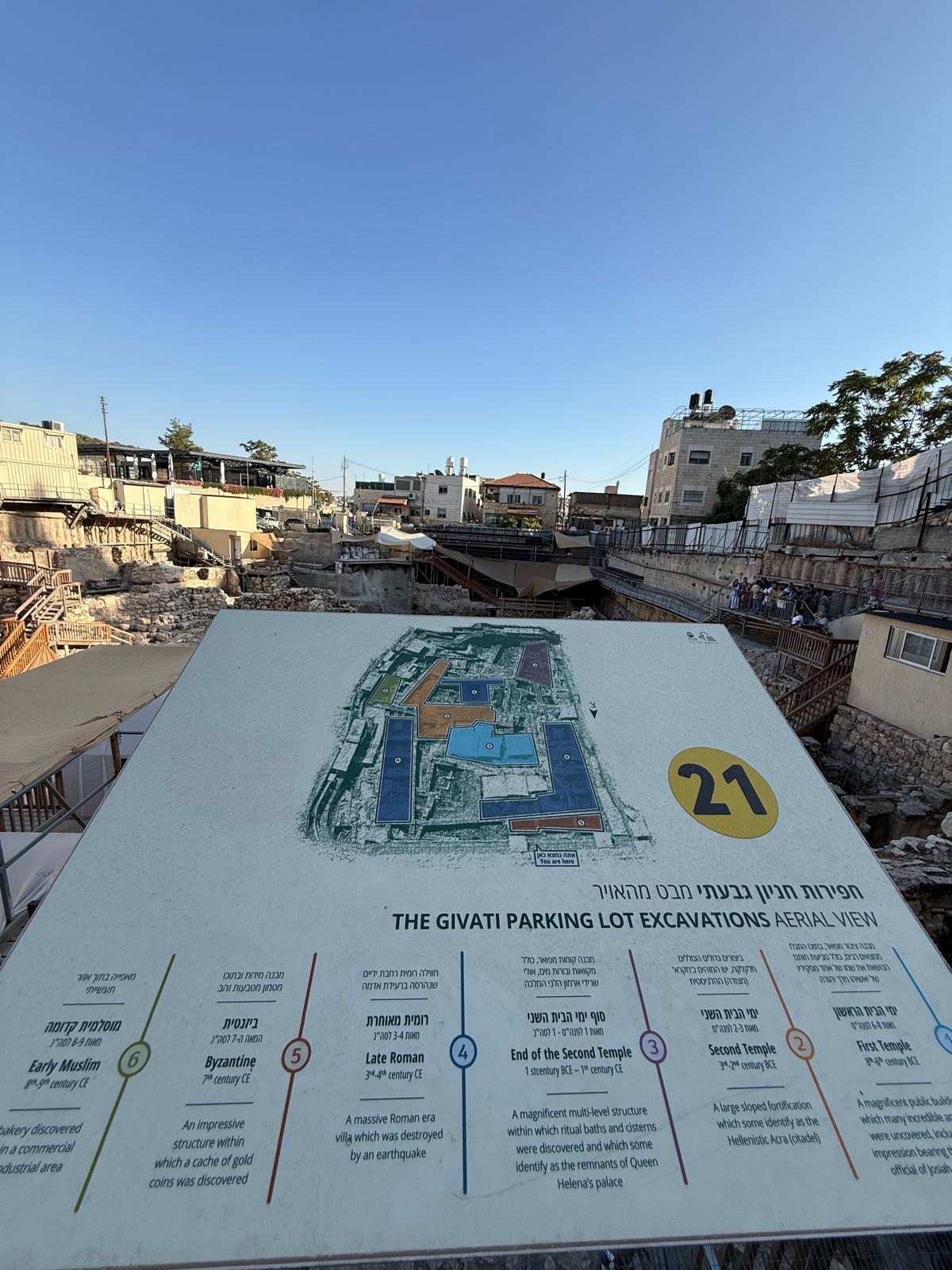
In the hours leading up to the conference, which is devoted to new discoveries and fresh analyses of previous finds, participants were offered tours of archaeological areas generally off-limits to the public.
One tour went beneath the former Givati parking lot, where excavations have been underway for more than 20 years in the Tyropoeon Valley, west of the ancient city that King David conquered from the Jebusites some 3,000 years ago.
Among the more moving recent finds were rare remains of burned sycamore wood dated to the Babylonian destruction of Jerusalem and the First Temple.
Other tours visited the newly opened Pilgrimage Road, used by pilgrims during the Second Temple period; mysterious rock-cut rooms, possibly sacred spaces, on the eastern slope; newly discovered roads near the southern wall of the Temple Mount; and the Pool of Siloam.
A more challenging walk took participants to the Valley of Hinnom, or Gai Hinnom, associated in the Book of Jeremiah with the sacrifice of children to Moloch. The Hebrew name later gave rise to “Gehenna,” a term associated with hell.
The conference itself took place under a mild Jerusalem evening sky near a replica of the Theodotus inscription, which refers to a Second Temple-era synagogue and facilities for pilgrims.
The master of ceremonies was Dr. Eyal Meron, a researcher and respected teacher of tour guides.
The mystery of the Acra
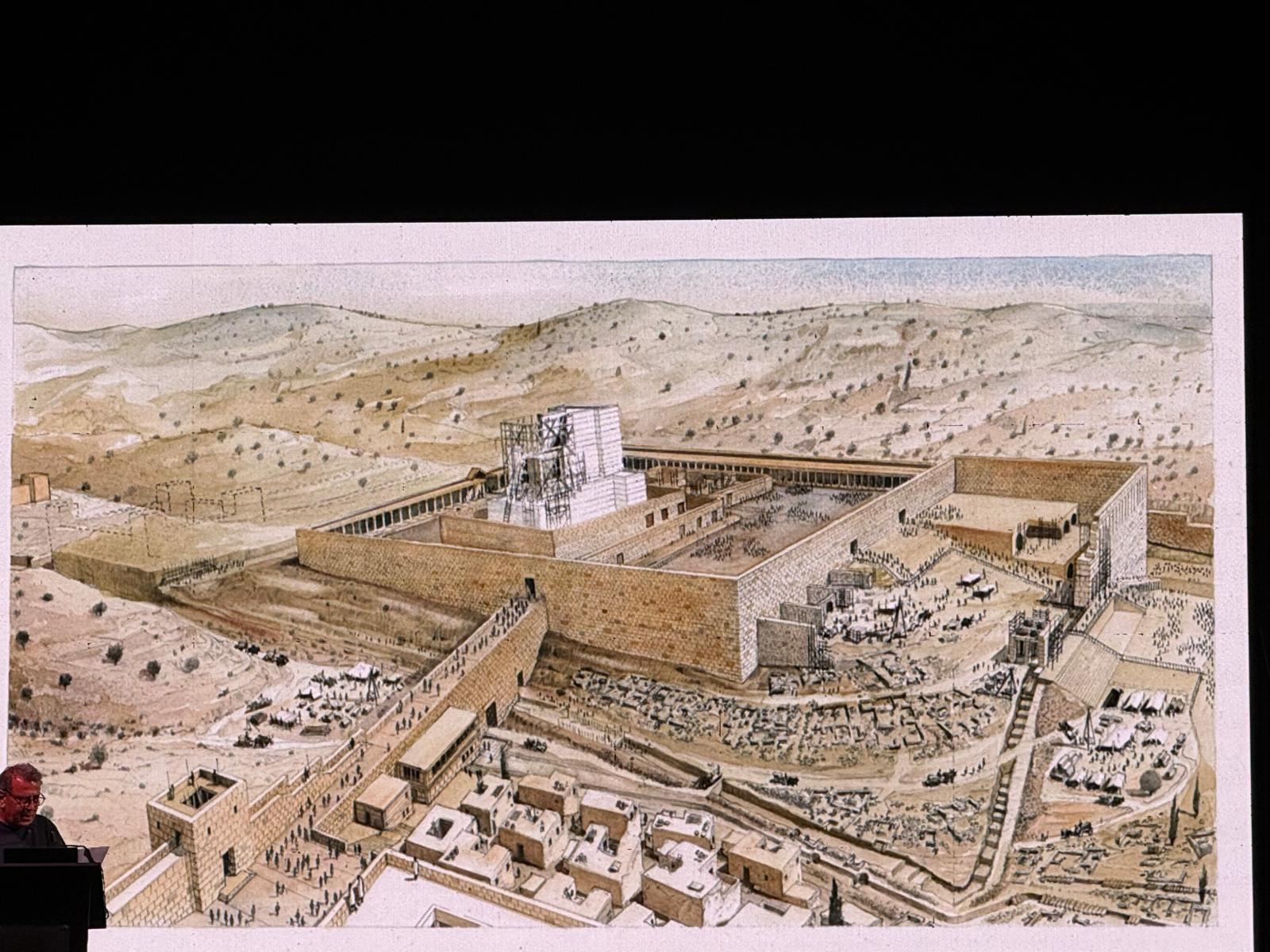
Dr. Ayala Zilberstein presented research on the Acra, the famous Seleucid fortress that the Hasmoneans struggled for years to overcome.
Its location has long been debated, with ancient sources and modern scholars placing it at different sites. Zilberstein made the case for its location in the Givati excavation area, below the Temple Mount but overlooking the lower city.
Her presentation also highlighted the distinction between two central areas of ancient Jerusalem during the First and Second Temple periods, separated by the destruction of the First Temple and the Babylonian exile.
One was the sacred precinct on Mount Moriah, where the Temple and its religious services were centered and where large numbers of pilgrims gathered during the three pilgrimage festivals. The other was the city of permanent residents, with the homes, streets, markets and infrastructure of daily life.
Rethinking Jerusalem’s water system
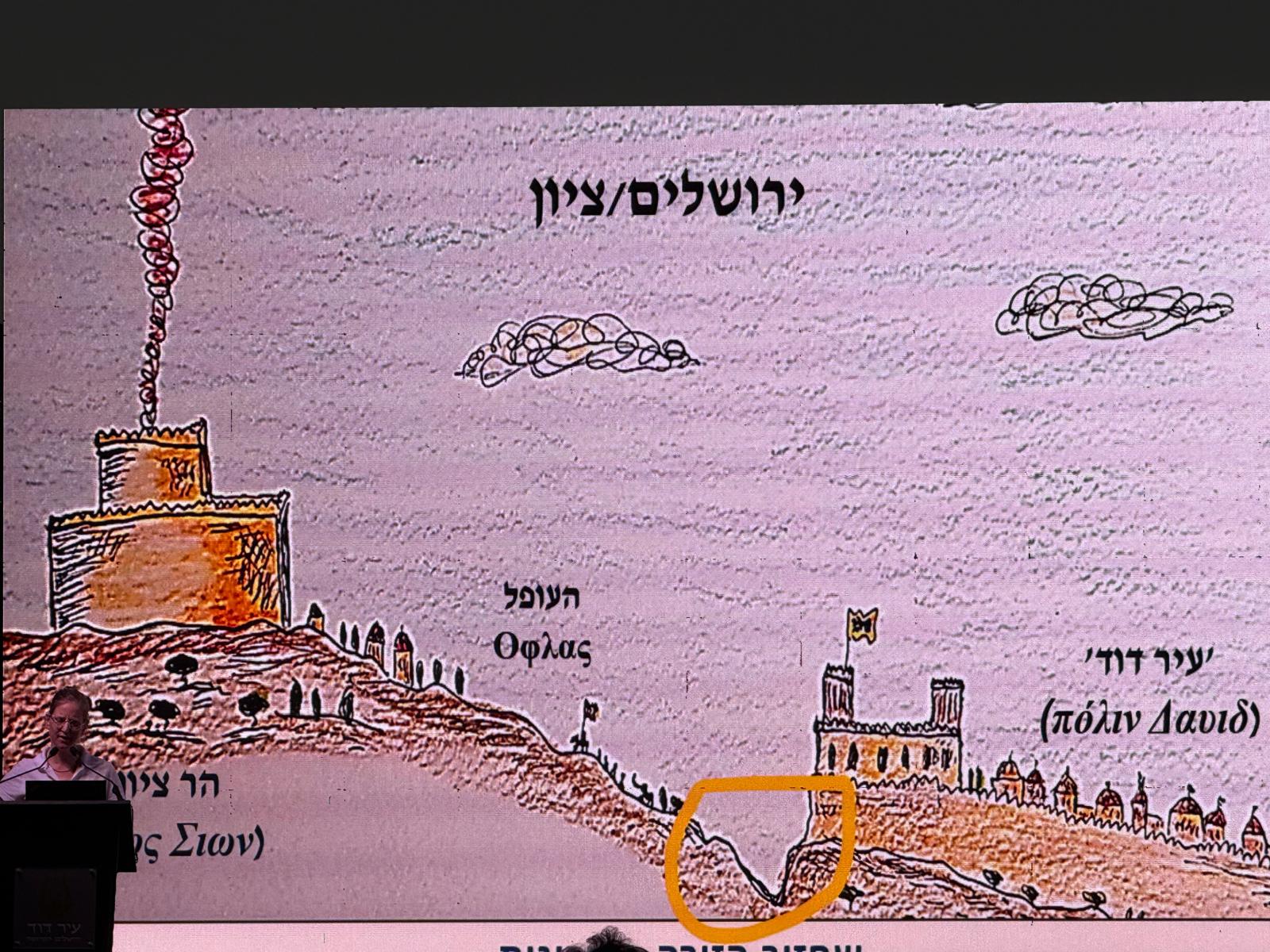
Dr. Eli Shukrun continued a discussion sparked by last year’s surprising discovery concerning the dating of the Pool of Siloam, suggesting that elements of Jerusalem’s water system may predate King Hezekiah by about a century.
The findings have implications for how archaeologists understand Jerusalem’s tunnels and waterworks, including those traditionally associated with preparations for the Assyrian threat at the end of the eighth century BCE.
The discovery is also spurring renewed interest in adjacent areas, the channels leading to the pools and their functions. Researchers are examining whether some structures may have been destroyed by earthquakes, including one mentioned in the Book of Amos.
The Bible and historical sources such as Josephus remain important references alongside the archaeological and scientific evidence.
Roads to the Temple
The southern wall of the Temple Mount has been a major focus of excavation over the past year, as explained by Prof. Ronny Reich. His fellow researchers include Dr. Yuval Baruch and Esther Rakov Mellet.
Among the questions being examined is how this area accommodated the enormous influx of pilgrims arriving in Jerusalem for the festivals. How did priests and Levites reach the Temple? Where were shops located? And how were sacrificial animals brought into the compound?
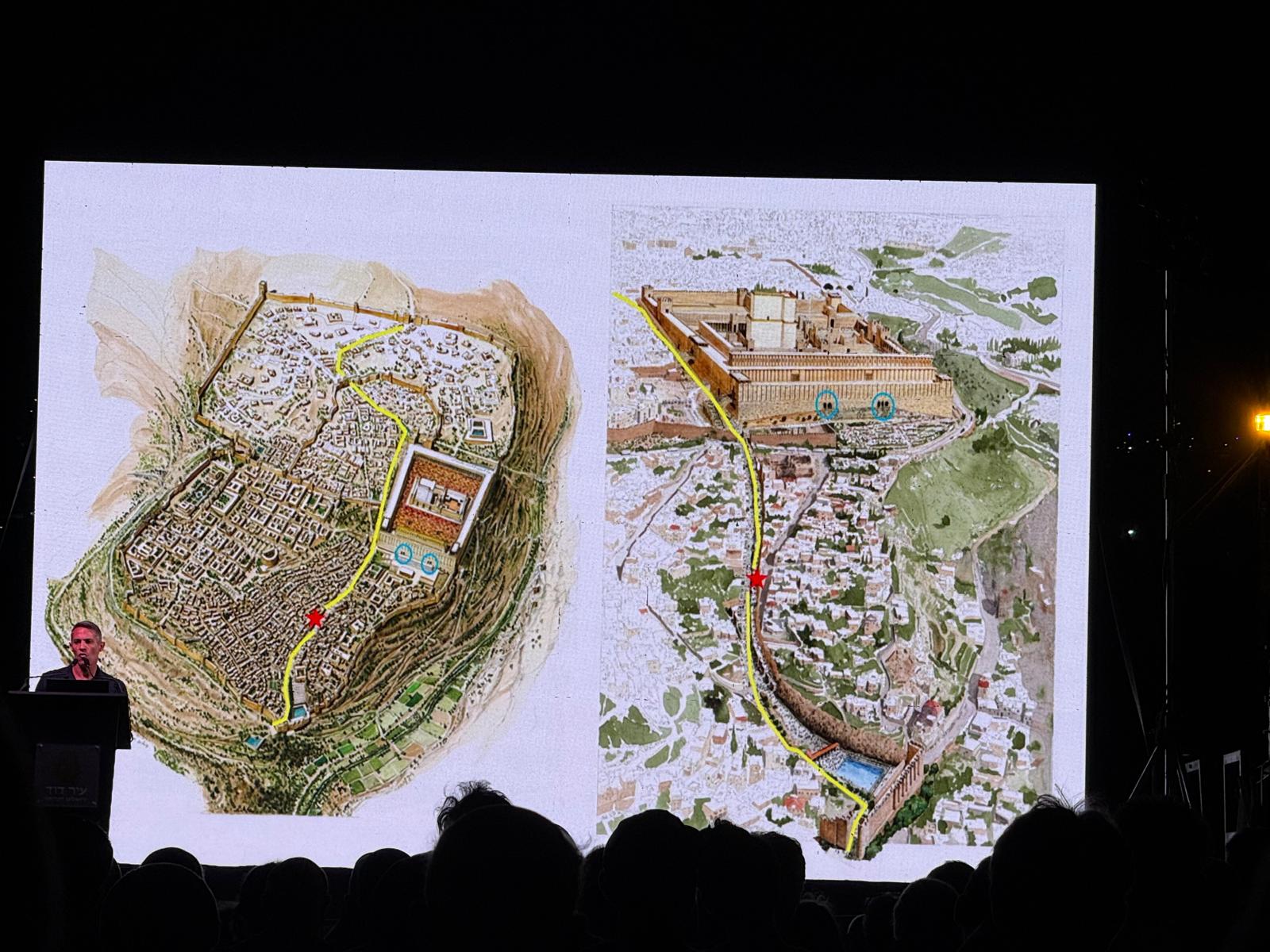
Dr. Nachshon Szanton presented findings from research conducted with Dr. Joe Uziel and Ari Levi into the function of roads leading from the pool and the lower gate toward the city.
The road from the lower city diverged. One route led to a monumental street that enabled worshippers to move toward the gates on the southern side of the Temple Mount complex. The other headed northwest toward the upper city and its more ordinary streets.
The researchers titled their presentation, “Between the Sacred and Profane.”
A past that remains alive
After the lectures, shuttles returned participants to Jaffa Gate and the parking lots, train platforms and bus stops of modern Jerusalem.
Those who walked through the Old City encountered throngs of Jews making their way to the Western Wall for Selichot prayers ahead of the High Holidays.
In the absence of the Temple, prayer replaced sacrifice and the Western Wall became Judaism’s most prominent place of prayer. Yet through collective memory and the painstaking work of archaeologists and scientists, ancient Jerusalem remains tangible.
So, too, does Jerusalem itself—a city once again sovereign under Jewish rule, where Hebrew is spoken and the Bible remains part of the living culture.
The discoveries in the City of David are integral to deciphering the past of this incredible place.
Why Israel? by Rev. Willem Glashouwer
Order the book