Research shows Jewish young adults engage informally and are open to deeper engagement

Three-quarters of Jewish young adults in the United States say they do something Jewish regularly, often at home with family or friends, according to new research from Sense Worldwide, commissioned and released by the Jim Joseph Foundation. Known as Project Prism, the research offers a look at Jewish young adults today, including those not involved in Jewish communal life, painting a rich picture of how they express their Judaism, the types of experiences and relationships that impact them most, the external factors that shape their lives and the key drivers of much of their decision-making.
The multi-method study used surveys and interviews with Jewish young adults, along with cultural analysis, detailing this generation striving for meaning and connections in a rapidly changing and often unsettling world. The dataset represents more than 2,000 Jewish young adults between the ages of 22 and 40 across a broad spectrum of backgrounds, family structures, religious identities, levels of participation, geography and life experiences.
For Jewish young adults, the research finds that life feels fast, the demands are layered and the emotional load is constant. This context is a thread in many of the key insights from the research:
- A lot of meaningful Jewish life is happening informally and “off-site.”
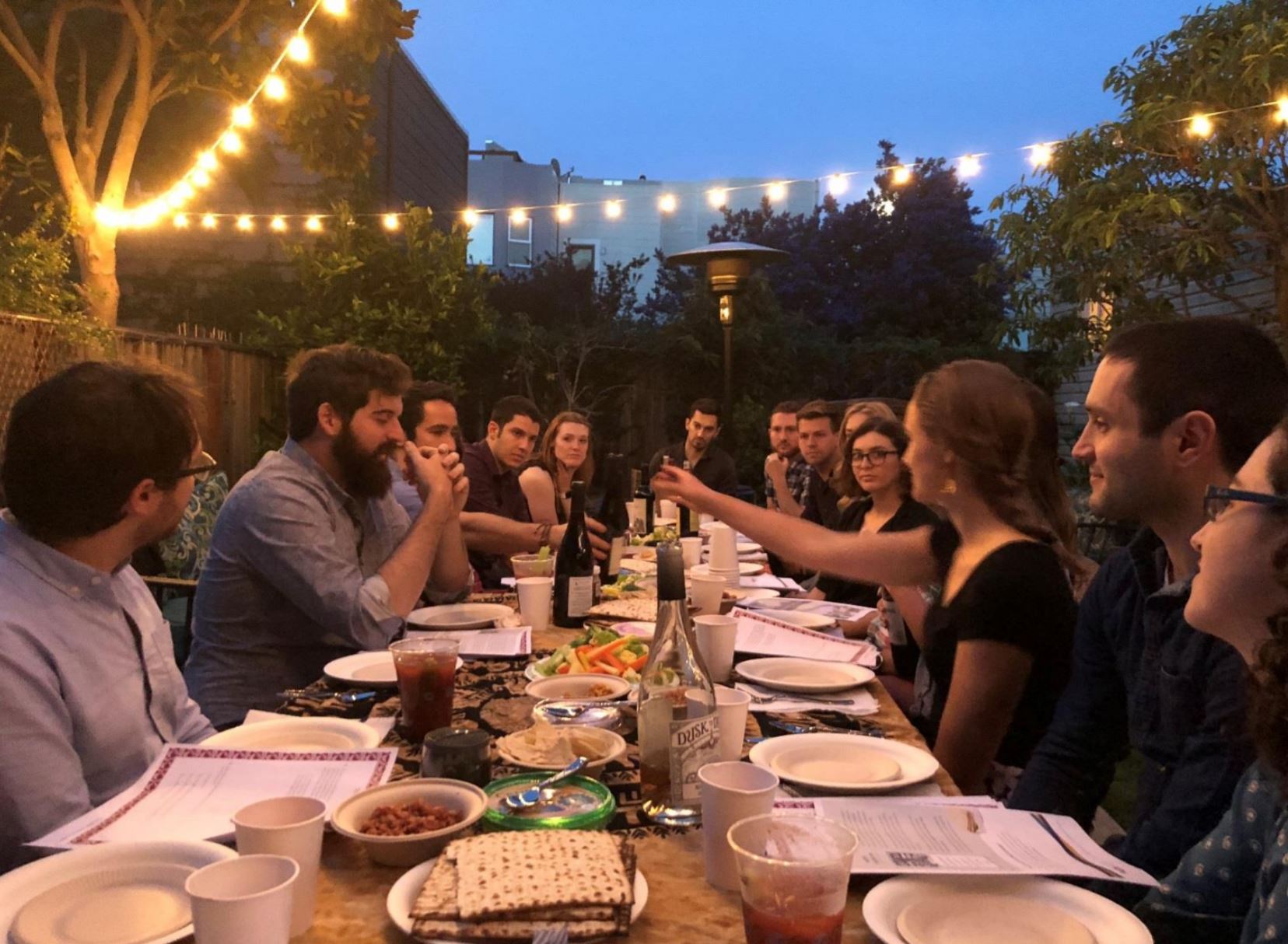
o Seventy-five percent of Jewish young adults say they regularly do something Jewish in their lives, often at home with family or friends. Of those surveyed, 45% say this is their only form of participation in Jewish experiences.
o Informal participation is often substantial, social and meaningful. Common activities are celebrating holidays with friends or family, enjoying Jewish food and other cultural practices and talking about Jewish topics.
o Informal participation in Jewish life is a stronger predictor of feelings of connection and purpose than participation with Jewish organizations.
- Three factors impede more participation in Jewish life for Jewish young adults.
o Relevance and connection – For many, Jewish life feels too distant from who they are, what matters to them or where they are in life.
o Flexibility – Jewish activities need to fit around modern lives, in formats that are manageable, low pressure and easy to step into.
o Complexity – Young adults want spaces that can hold complexity, plurality and nuance without social penalty.
- Immersive and socially intensive experiences are especially likely to generate a sense of belonging and to have a lasting positive impact.
o Israel travel programs, Jewish summer camp, youth group, b’nai mitzvah experiences and Jewish high school create a sense of belonging.
o Merely attending an activity is less predictive of later positive outcomes than whether the participant felt they belonged.
- Jewish young adults don’t lack a sense of purpose; they find purpose closer to home.
o Sixty-eight percent report having a high sense of direction or purpose in life. Only 23% say being Jewish plays a strong role in that.
o Sources of purpose are helping others, personal growth, work or career and supporting family.
o Young adults respond to instability, overload and institutional distrust by investing in activities where their effort leads to a visible result that they feel good about.
- A key driver of participation in Jewish experiences is already feeling connected to Jewish people and community.
o Connection is both an outcome and a precondition and Jewish connection is relational before it is institutional.
o Connection depends on close and emotionally grounded relationships, but young adults’ lives make those relationships hard to build.
o Jewish institutions contribute to feelings of connection, but these feelings are generally built on a foundation created by family, friendships and shared culture
The research, conducted in December 2025 through April 2026, also provides insights into how Oct. 7, the subsequent wars and the rise in antisemitism have reshaped feelings of connection and engagement. As a result of these events, 11% said they engaged more in Jewish spaces, 18% said recent events caused them to engage more selectively, 11% said they engaged less and 10% said they disengaged from participating in Jewish communal spaces altogether.
“The research gives us a much fuller and accurate understanding of where, how and why Jewish young adults seek out and experience Jewish life,” said Stacie Cherner, director of research and learning at the Jim Joseph Foundation. “Now, importantly, we can begin to translate these insights to action. As we continue to support longstanding organizations whose work is affirmed by this data, we’re also learning alongside partners in the field about potential new opportunities the research uncovered. We look forward to this ongoing learning journey, to ultimately help more young adults tap into Jewish life, community and experiences that bring them meaning.”
“The breadth and depth of this data is fascinating and actionable,” said Yonah Schiller, chief R&D officer at the Jim Joseph Foundation. “It affirms much of our early R&D research and points toward new needed areas of exploring impact and designing for a new generation in a quickly changing world. A critical mass of Jewish young adults are not engaging in Jewish communal life, yet are also Jewishly activated within family life and trusted and integrated social networks.
“The possibilities for novel and resonant expressions of Jewish life are unlimited. This is an exciting and inherently creative moment for the future of Jewish life in the United States. Creating and supporting new interventions, frameworks and infrastructures to meet this moment has never felt more critical and urgent.”
“What made this work especially exciting was the combination of rigor and breadth: a robust, probability-based quantitative sample developed in partnership with NORC at the University of Chicago, alongside a genuinely multi-method research approach that combined digital qualitative research, machine learning analysis and cultural research (through both a consumer culture scan and semiotic analysis) with the quantitative survey,” said Courtney McLauchlan of the Sense Worldwide research team. “For us, this project offers a holistic snapshot of how young Jewish adults in America think, feel and live – not just in relation to Jewish identity and Jewish life, but in the wider context of being a young adult in America today.
“Across the sample, we saw that building close, emotionally grounded relationships takes real effort in the context of busy schedules, declining third spaces, more mobile lives and the pull of online or curated forms of connection,” McLauchlan continued. “In that sense, the Jewish findings sit within a bigger social picture: young adults are trying to build meaningful connection in a world that does not always make that easy, which highlights the important role the Jewish community could play in their lives-provided it meets young people where they are, rather than expecting them to reshape their lives around Jewish life.”
About the research scope and methodology
Known as Project Prism, the research was a multi-method study of Jewish young adults in the United States conducted in partnership with Sense Worldwide, with NORC at the University of Chicago serving as the quantitative survey partner.
Sense Worldwide led this project through multiple complementary research approaches. Project Prism combines online qualitative research, a nationally representative survey, consumer culture analysis, semiotics and machine learning. Each method helps answer a different set of questions and brings a different perspective and together they create a more complete picture than any one method could on its own.
The qualitative phase helps surface stories, tensions and lived experiences. The quantitative survey measures how widespread those experiences are by looking for patterns at scale. Consumer culture analysis examines the broader cultural forces shaping young adulthood in America today. Semiotic analysis explores the symbols, narratives and cultural codes through which young adults construct meaning. Machine learning techniques allow the researchers to use complex data modeling to identify patterns and relationships in the data that traditional descriptive analysis may overlook.
NORC’s expertise in rigorous probability-based survey research helped ensure that the findings would reflect the diversity and complexity of Jewish young adults across the United States, reducing sampling bias and allowing the findings to be generalized with confidence. The result is a dataset representing more than 2,000 Jewish young adults between the ages of 22 and 40 across a broad spectrum of backgrounds, family structures, religious identities, levels of participation, geography and life experiences.
Why Israel? by Rev. Willem Glashouwer
Order the book