“Always in God’s Hands” – Released Hostages Talk About Their Faith in Captivity
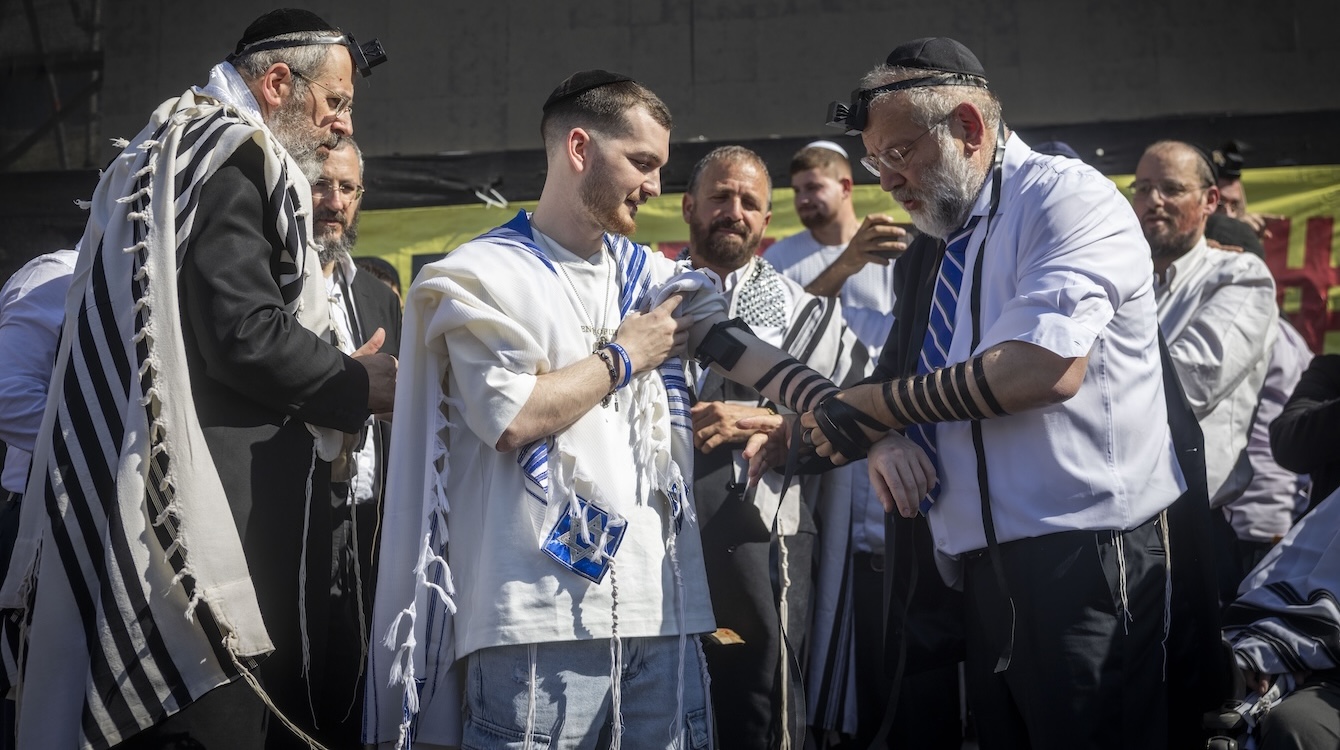 Former hostage Bar Kupershtein and dozens of Jewish men lay tefillin at Hostage Square in Tel Aviv, October 31, 2025. Photo by Chaim Goldberg/Flash90
How does one’s faith survive in the darkest depths of despair? Even more remarkable is the question of how someone can find faith while being held captive and chained in a tunnel 50 metres below ground. Former Israeli hostages share extraordinary testimonies of faith and resilience reminiscent of the experiences of Biblical heroes such as King David, Daniel, Esther and Paul.
“How does one’s faith survive in the darkest depths of despair?”
For the Israeli hostages held captive by Hamas in Gaza, there were many reasons to hope that a higher power was watching over them as they endured unimaginable hunger, beatings, abuse, physical and mental torture, interrogations, sexual assault and humiliation. They were stripped of all their freedoms, but amid these incredible atrocities, there was something their captors could not take away from them, even though they restricted it or tried to prevent it—their faith in the God of Abraham, Isaac and Jacob. When they began to share their individual experiences after their release, there was a common ‘thread of faith’ that ran through many of their stories.
Bar Kupershtein (23)—Always in the Hands of the Creator
Released hostage Bar Kupershtein survived more than two years in cramped, dark tunnels with little food and regular beatings by clinging to his faith and believing that he was ‘always in God’s hands’. Bar was working as a security manager at the Nova Festival on 7 October 2023, helping the injured as a paramedic until the very end, when he was abducted and taken to Gaza. On 13 October 2025, he was released as part of a ceasefire along with 19 other hostages in exchange for around 2,000 Palestinian prisoners.
Kupershtein reported that he was held with five other prisoners in a very small tunnel room. They supported each other, even after being beaten. The hostages learned Arabic but resisted attempts to convert them to Islam; every Friday evening they secretly recited the Shabbat blessings.
One of the worst moments was when a guard demanded that the hostages decide which of them should be killed—a threat he did not carry out. Bar prayed at the time, “I am in your hands, God.” He later learned that his mother had said the same sentence to a Hamas terrorist who had contacted her by telephone while her son was being held captive. She said: “My son is not in your hands, he is in God’s hands, and you are in God’s hands too,” she had replied to his threats. It became the family motto. After his release, Bar presented Defence Minister Israel Katz with a bracelet bearing the Hebrew phrase: “Always in the hands of the Creator.”
“During my captivity, I felt every prayer you said for me, and even in the darkness, I had light.”
Omer Shem Tov (23)—A Hanukkah Miracle in the Tunnel
Omer was held captive in the tunnels of Gaza for 505 days. He recalls a miraculous moment when a small bottle of grape juice he had brought with him and used for Kiddush, the Shabbat blessing, never ran out nor spoiled. He compared it to the Hanukkah miracle, when the oil that was meant to last for one day lasted for eight days. “This is just one of many stories that showed me how good God is, of how He was there with me.” Back in Israel, he said in an interview, “During my captivity, I felt every prayer you said for me, and even in the darkness, I had light.”
Eli Sharabi (53)—”The Power of Faith Is Amazing”
Eli was held captive in Gaza for 491 days. Although he had never been religious, his imprisonment led him to pray. “I am not a religious person, but from the first day of my abduction I recited the ‘Shema Yisrael’ every morning—something I had never said before in my life. The power of faith is incredible. There is something watching over you.” The Shema is one of the holiest prayers in Judaism and appears in the Fifth Book of Moses: “Hear, O Israel: The Lord is our God, the Lord is one.”
Keith Siegel (65)—”I Found Faith in the Tunnel”
Siegel also began to pray during his 482 days in captivity. He began to say blessings over the little food he received, something he had never done before, and recited the Shema prayer for the first time. “Even in the tunnels, I found ways to feel His presence,” he said, thanking God repeatedly for his survival. After his release, his daughter asked him what he would like for their first Shabbat meal together. His answer surprised her: “Do you know what I want most? A kippah and a Kiddush cup.”
Agam Berger (20)—”I Chose the Path of Faith”
The female observation officers (guardians) of the Israeli Defence Forces, Agam Berger (482 days in captivity) and Liri Albag (477 days in captivity), kept their faith during their captivity. They had been abducted from their guard post at Kibbutz Nahal Oz, together with five other young women, and taken to Gaza. While being held in a terrorist’s house, they learned the Hebrew date from Israeli television. This helped them calculate the Jewish holidays so that they could observe them. They were given hardly anything to eat, yet they fasted on Yom Kippur and Tisha b’Av.
Agam Berger made a profound spiritual decision during her time in Gaza when she also began to observe Shabbat. After her release, she wrote on a blackboard: “I chose the path of faith, and on the path of faith I returned.”
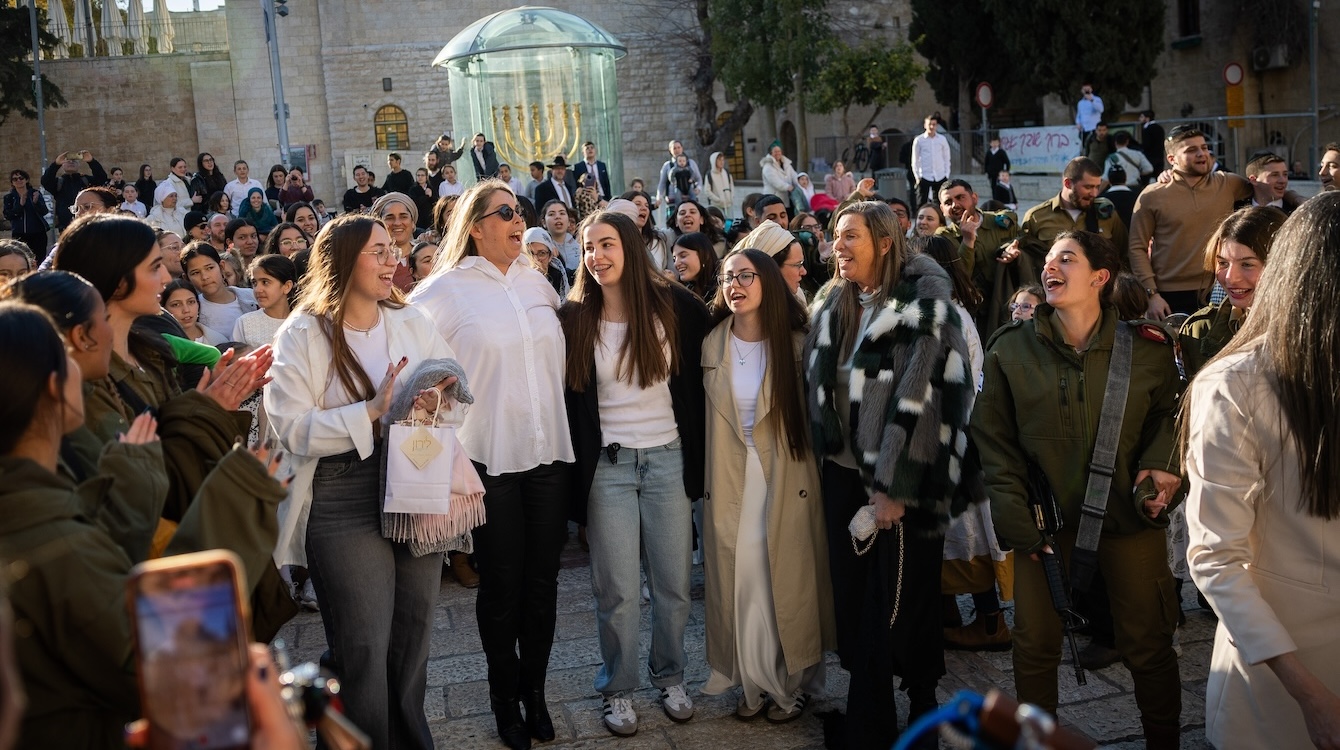
Former hostage Agam Berger and family members visit the Old City of Jerusalem, before Shabbat, on February 28, 2025. Photo by Chaim Goldberg/Flash90
She asked her captors for a siddur (Jewish prayer book) during her captivity. One of them laughed at her request. But she prayed to God, and two days later he returned with a siddur he had found in Khan Yunis.
“Your God loves you,” he said to her. The prayer book had probably been left behind by a soldier in the Israeli Defence Forces. Berger said that observing the Sabbath gave her strength: “I simply refused to light a fire on the Sabbath.”
“I am a Jew, I am strong, I will not break down.”
Rom Braslavski (21)—”I was Asked to Convert to Islam”
Rom Braslavski had been held captive by Palestinian Islamic Jihad alone and had been taken to the tunnels just two days before his release. His captors told him that if he converted to Islam, he would receive more food.
He refused and was severely abused, tortured and starved. He kept telling himself: “I am a Jew, I am strong, I will not break down.” Rom and other hostages found their Jewish faith during this difficult time, and it gave them the strength to survive.
Matan Angrest (21)—“Prayers Helped me Through Captivity”
Matan prayed three times a day using a prayer book he had requested from his captors and received from a senior Hamas official. He was moved from place to place. His conditions were very harsh and he suffered torture because he was a soldier.
Matan Zangauker (25)— “Psalms Became My Anchor”
Zangauker told his relatives that he had found a worn book of Psalms (Tehillim) underground and prayed from it every day. In a place with little air and almost no daylight, the steady rhythm of these verses became a routine, then an anchor.
Omer Wenkert (23)—Psalm 121 on the Day of His Release
Omer Wenkert was held captive for 505 days. On the day of his release, as he and the other hostages sat there handcuffed and blindfolded, they began to sing a verse from Psalm 121: “I lift up my eyes to the mountains—where does my help come from? My help comes from the Lord, the Maker of heaven and earth.”
These hostages found God in the tunnels of the Gaza Strip. They are a great inspiration to the people of Israel, who must recover with them from the trauma of war and captivity.

Why Israel? by Rev. Willem Glashouwer
Order the book