Settlement Trade Bans
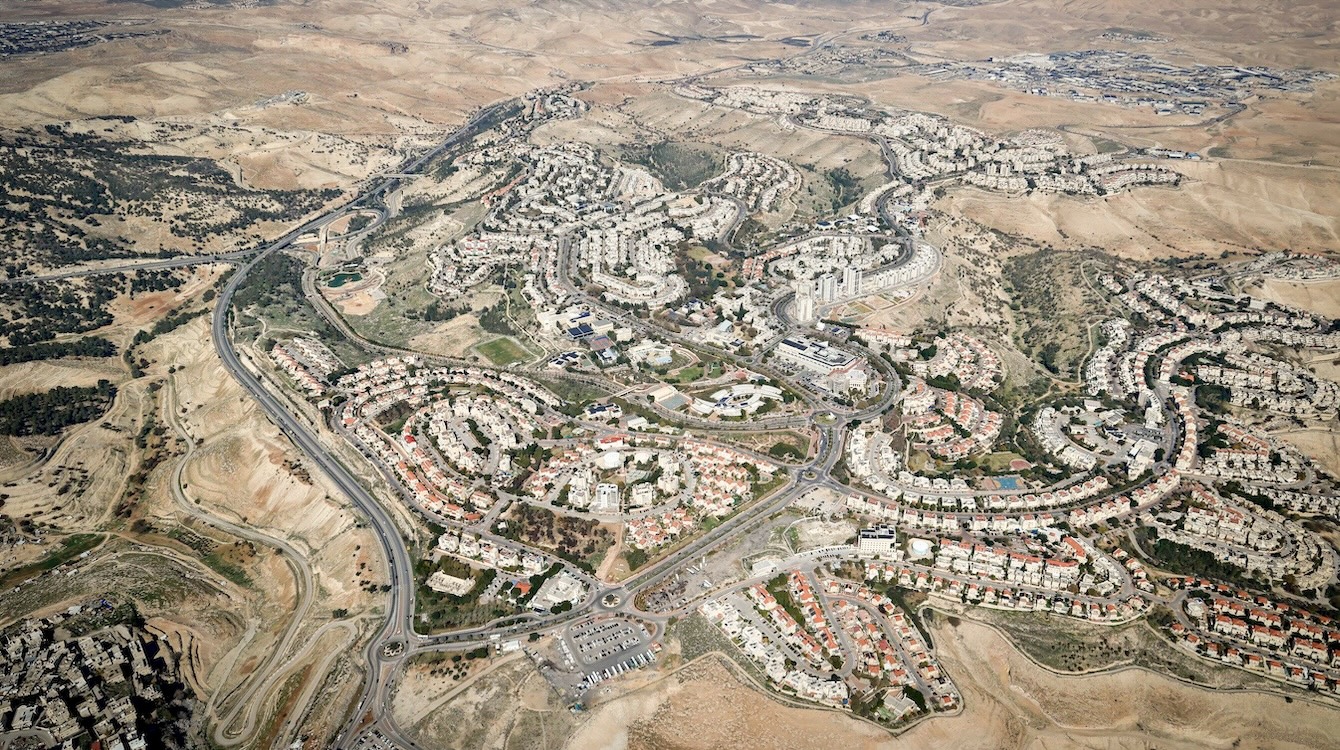 Aerial view of Ma’ale Adumim, an Israeli settlement outside of Jerusalem. | Photo: Flash90
More and more Western states are rallying to impose sanctions on trade in products from “illegal Israeli settlements”. What appears to be a political and legal conflict is in fact an intensifying spiritual battle for Jerusalem, that will lead to a major conflict between Israel and the nations. Like a volcano, pressure has been building up deep underground for decades—and now it is starting to erupt.
“Like a volcano, pressure has been building up deep underground for decades”
Trade Bans
On 8 September, twelve countries—the UK, France, Canada, Denmark, Finland, Iceland, Ireland, Norway, Poland, Portugal, Spain and Sweden—issued a statement jointly pledging to “introduce national and/or support European restrictions on trade in goods with settlements which are illegal under international law.”
Britain, France and Canada are the ones actually pulling the trigger: UK Foreign Secretary Ed Miliband announced a full import ban on settlement goods within nine months, paired with “action against specific companies and individuals” financing or building in the settlements, though he carved out exemptions for religious items and Israeli medicines. The other nine committed only to “support further action”—a hedge that leaves plenty of room for the coalition to fray before Britain’s own ban actually bites. The twelve-nation statement frames the restrictions as compliance with international law rather than punishment. It cites: settlements being “illegal under international law” (naming the E1 project specifically); actions “tantamount to the annexation of Palestinian land”; the “forcible displacement of the Palestinian population”; “unprecedented levels of settler violence and settlement expansion”; a need to “ensure accountability for settler violence, and investigate allegations against Israeli forces”; and alignment with “relevant UN Security Council resolutions” supporting a two-state solution with Palestinian statehood alongside Israeli security. This builds on ground already shifting under Israel’s feet for a year. Spain banned settlement imports first, in September 2025, followed by Slovenia, Belgium, and now the Netherlands, which adopted a national ban that takes effect 22 September 2026, covering goods from the West Bank and Golan Heights, including intermediate trade by Dutch companies abroad. Ireland’s Occupied Territories Bill— applicable to goods only, after the government stripped out services over its own legal analysts’ objections—cleared its final vote in July and awaits signature.
“The twelve-nation statement frames the restrictions as compliance with international law rather than punishment”
Israel’s Response
It did not take Jerusalem long to answer. Israel closed the British consulate in East Jerusalem, pulled the UK out of the Gaza ceasefire support arrangements it had helped stand up, halted Palestinian Authority security training, and barred a dozen British parliamentarians from entry. Foreign Minister Gideon Sa’ar accused London and its partners of “stoking antisemitism”; on the British side, Reform MP Richard Tice called the sanctions a “grave mistake” that would embolden the very antisemitism Sa’ar warned of—a rare instance of an Israeli minister and a British opposition figure making the identical argument from opposite sides of the debate.
“Foreign Minister Gideon Sa’ar accused London and its partners of “stoking antisemitism””
The Real Issue: Sovereignty
The main argument used to justify these trade bans is the International Court of Justice’s July 2024 advisory opinion, which found the occupation itself unlawful and said other states have a legal duty not to render aid or assistance to it. According to the ICJ, the reason the occupation is illegal is because the land, including “East Jerusalem”, belongs to the Palestinian people.
The ICJ advisory opinion is the legal hook most of these governments’ own lawyers, and outside groups like Amnesty and Human Rights Watch, point to as the basis for a trade bans.
Since June 1967, Israel has exercised control but not asserted legal sovereignty over the territory that was previously part of the Mandate for Palestine and in 1948 occupied by Egypt (Gaza) and Jordan (the old city of Jerusalem, and Judea and Samaria).
Since 1948 there have been basically two main categories of views about “who owns the land”—both within Israel and around the globe.
On the one hand, many (not all) in Israel and in the Jewish community and their allies around the world hold the view that the Jewish people have a right to live in the land of their ancestors (after all, they argue, Abraham, Isaac, Jacob and their descendants, and the kingdoms of Israel and Judah, were all located in the land that the world now calls “East Jerusalem” and “the West Bank”). Some of these people believe it is a Biblical right, others regard it as a historical, political and/or legal right.
“The ICJ advisory opinion is the legal hook most governments’ own lawyers, and outside groups point to as the basis for trade bans”
Opposing them are those (numerically, the majority of people in the world) who reject (or are ignorant of) the Jewish connection with the land and believe that “the Palestinians” are the rightful owners of this land. The latter group includes some who claim that the only way to solve the conflict is either to create a Palestinian state in the “occupied” territories, or to dismantle Israel and replace it with a single, democratic “State of Palestine”.
To this day, lawyers around the globe continue to debate the question. There is no consensus. Even in the International Court of Justice, there is a range of views. According to the Court’s Vice-President, Judge Sebutinde, the legal principle normally applicable in such situations (“uti possidetis juris”) means that in 1948 Israel “inherited” as borders the administrative boundaries of Mandate Palestine. This is the correct legal approach.
“At the center of this land—literally—is the city of Jerusalem”
Remember that the Palestinians and their Islamic allies do not just claim the “occupied” territories. The Palestinian National Charter claims Palestinian sovereignty over the whole of Palestine, “from the river to the sea”—the territory that in WWI was allocated for the Jewish national home under the Mandate for Palestine.
At the center of this land—literally—is the city of Jerusalem. The time has come for Israel to finally assert full sovereignty over Jerusalem and the whole land to which it is entitled: “from the river to the sea”.

Why Israel? by Rev. Willem Glashouwer
Order the book