Taking the light of Hanukkah to Ukraine
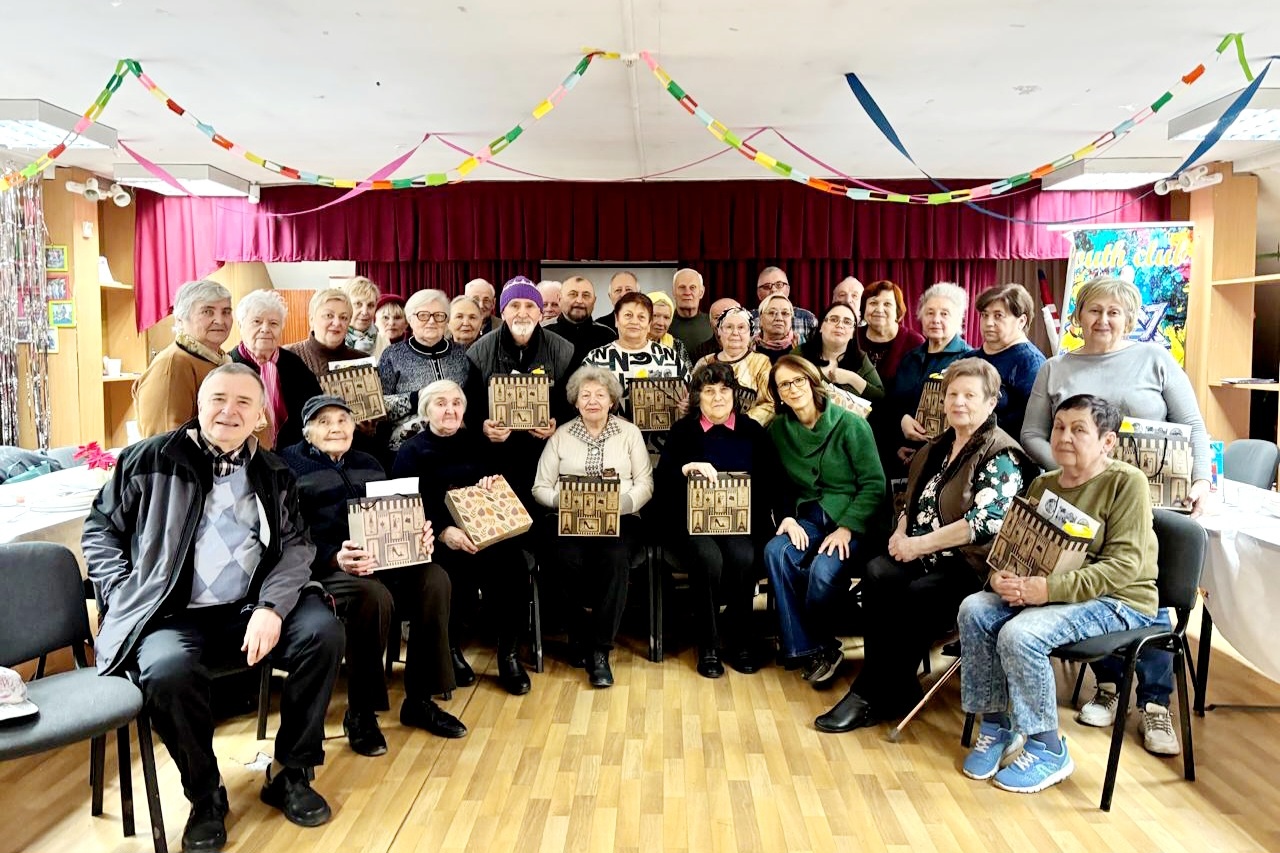 Hanukkah celebration with the Jewish community of Belts, Northern Moldova. | Photo: C4I Ukraine
Advent is actually the time for baking cookies and preparing for Christmas. But there is something that feels even more Advent-like: visiting the widowed orphans of the Shoah, now grown old, in Ukraine and Moldova. In their faces, we encounter the child in the manger who came into this dark world.
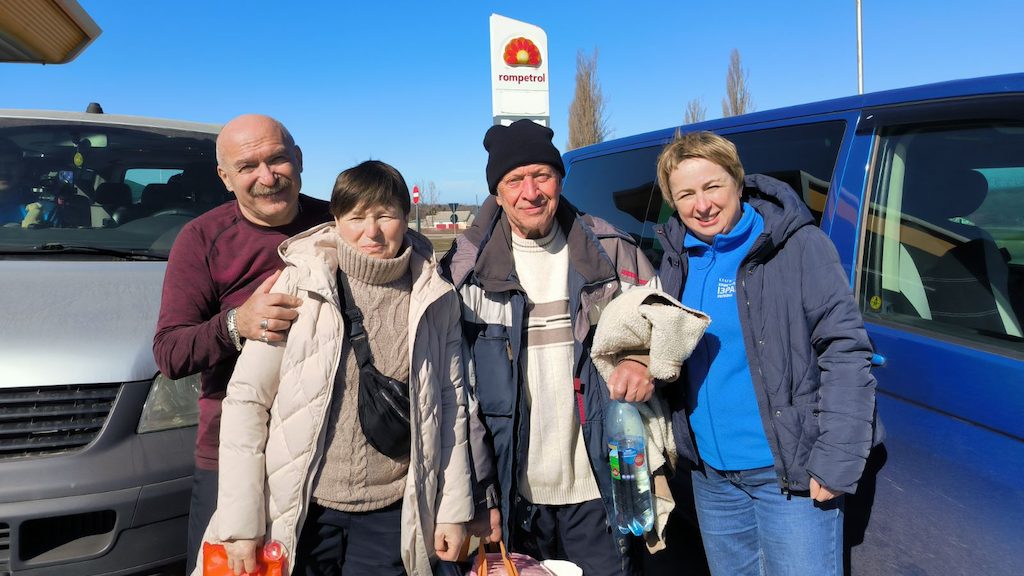
Ten days, ten Hanukkah celebrations. Can we do it? There were times when we thought winter wasn’t the right time to visit Eastern Europe. Eventually, we realized that there’s no other time of year like these dark winter months when Holocaust survivors and Jewish seniors are so hungry for light, love, and warmth.
Meyn Shtetele Belts
“We missed you so much this whole year—we’re emotionally starved!” are the first words from Boris in Belts, northern Moldova, who wraps me in a huge hug and doesn’t want to let me go. Belts is a mix of Soviet Union and gray; of simple conditions, but warm-hearted people who rarely see visitors from abroad. The next person asks how my mom is doing. The third takes me aside to give me something – she has knitted me a vest. I am speechless, thinking once again, we have no idea what our visits mean to the survivors.
This time I have a verse from Isaiah 46 with me – the daily devotional when I set out: “Listen to me, you descendants of Jacob… Even to your old age and gray hairs I am he, I am he who will sustain you. I have made you and I will carry you; I will sustain you and I will rescue you.“
Glittering Kishinov
All of Kishinov is glittering with American Christmas spirit. Glittering angels float above the streets, glittering buses rush past passers-by who take refuge from the puddles. We have invited those who live beyond the glittering world of the capital and carry a lifetime of bitter memories within them. We arrive extra early, but the expectant Jewish seniors have managed to beat us to it. We can barely get past the crowd of people into the hall because everyone wants to hug us right away.
Even though they are generally better off than in the north, our meeting is the event of the year for the Jewish seniors. Everyone has dressed up in the best of what is left in their closets from Soviet times – the ladies in hats, pearl necklaces, the gentlemen in festive suits.
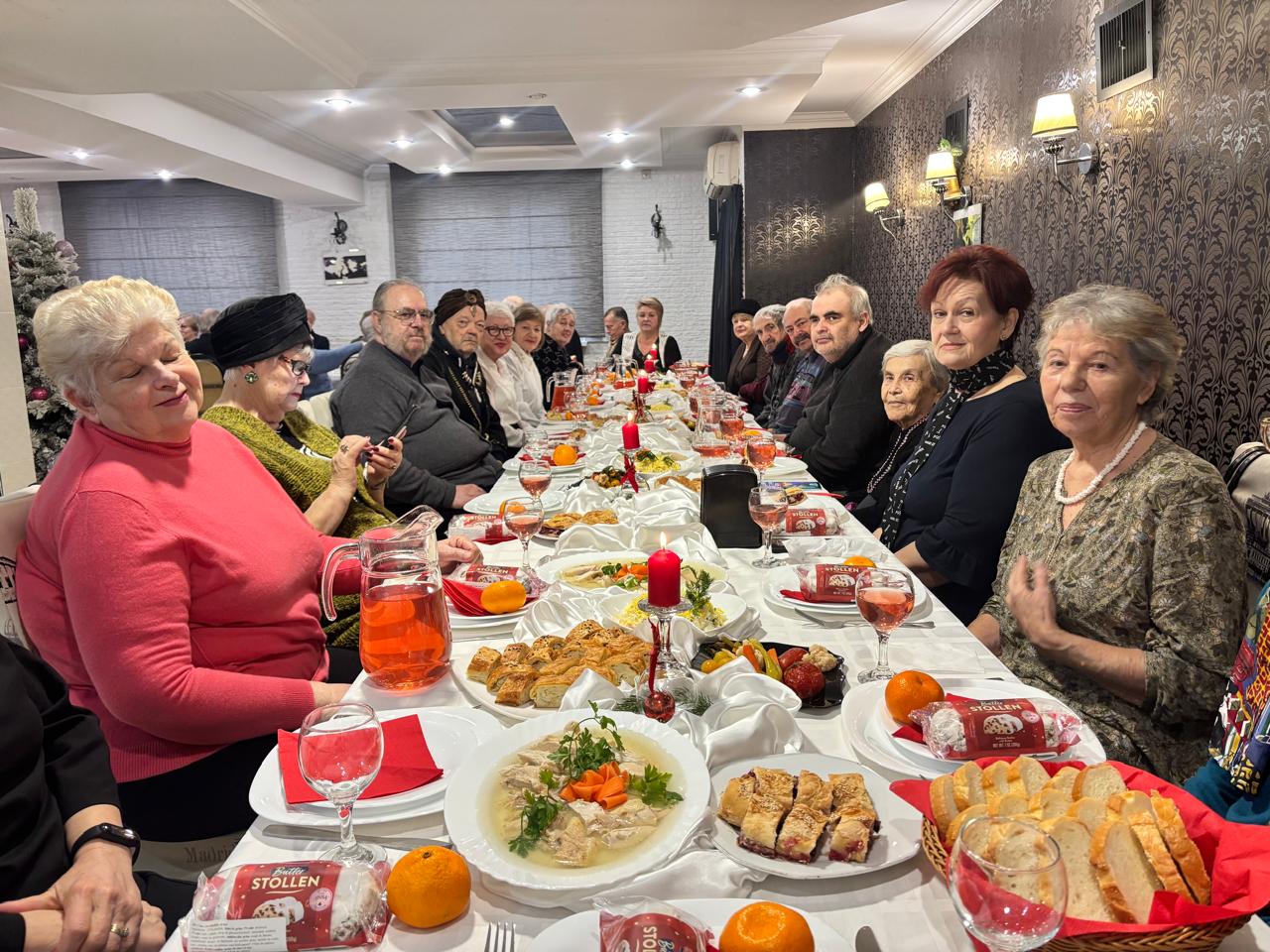
Joyful gathering with Jewish seniors and survivors in Kishinov. | Photo: C4I Ukraine
“Going to a restaurant is an unaffordable luxury for us,” says Galina with the black hat. “The fact that you invited us here is such a celebration for us – you can’t imagine!”
I also stop for a chat with Bella. “Do you remember?“ she asks. “Last time you visited, I was walking around with broken glasses. I’m so happy with my new glasses! I left them at home, I’m taking good care of them! You’ve made us so happy! Today you gave us reason to leave the apartment! As you know, I’m all alone. This festive table… I can hardly describe how grateful I am!”
There are other Germans
When Shaya arrives a little late, he walks straight up to me and for a big embrace. “I remember the first time we met, when you visited me in the hospital and we sat on the bench in the courtyard.” Shaya simply couldn’t believe then that there are other Germans besides those who had killed his family. “Actually, I didn’t want to come,” Shaya says. “I wasn’t feeling very well. Then I asked again what kind of event it was. When I heard your name, I signed up immediately, no question! I have such respect for you and what you do for us!”
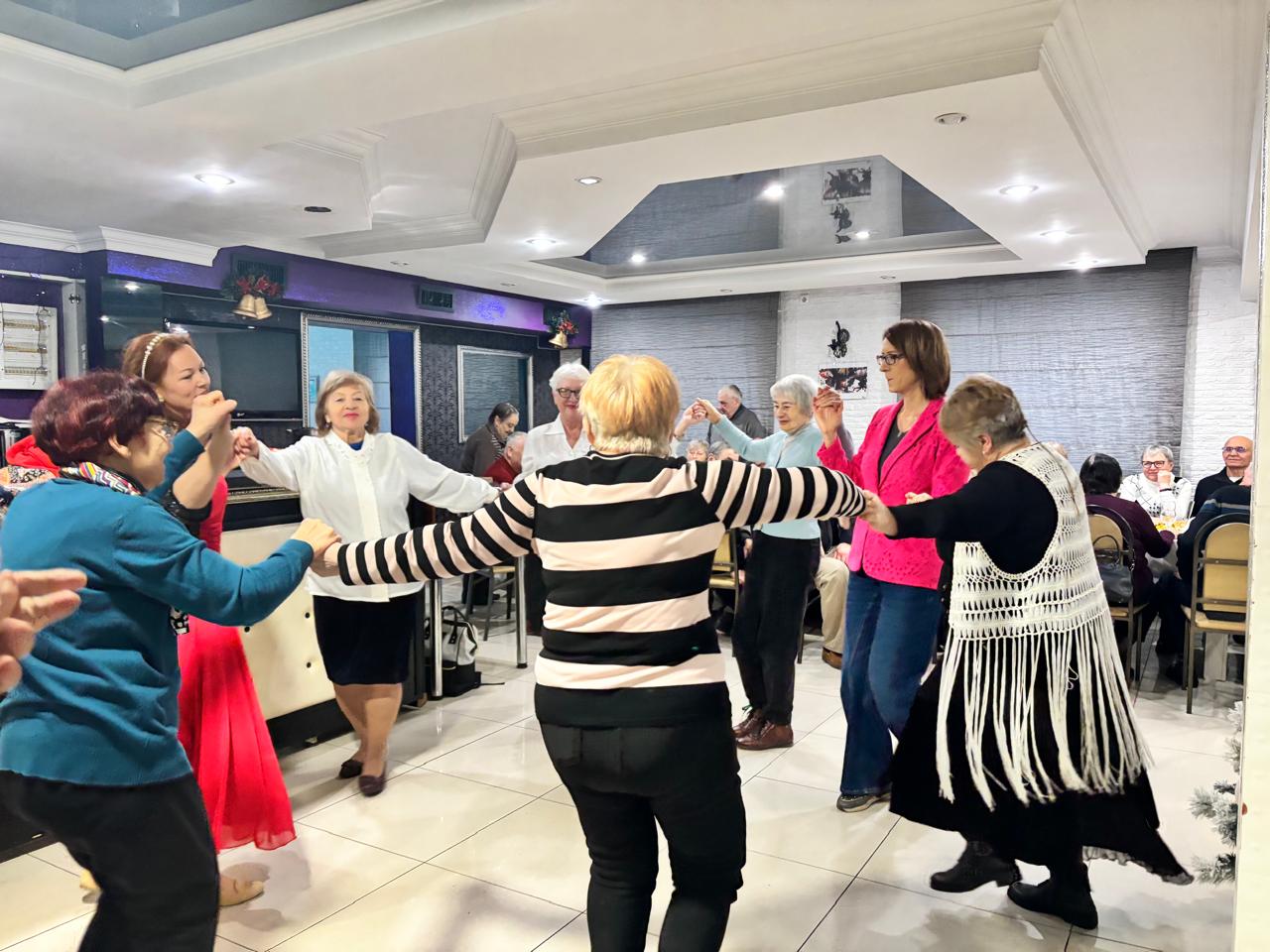
After the meal, dancing offers a rare moment of joy. | Photo: C4I Ukraine
Then there is a small Hanukkah program from the Jewish community, with singing and dancing. And then more hugs, times 40. Most of the kisses come from Georgetta, a survivor of the Balta concentration camp – the woman in the room who suffered the most at the hands of Germans.
“The fact that you don’t forget us means more to us than anything else!”
Departure for Odessa
Even though it’s not easy to leave carefree Kishinov behind, as we cross the border, my heart warms with anticipation of the dear Jewish seniors waiting for us in Ukraine. It won’t be easy. But it will be full of wonders.
Odessa is attacked by Russia all night long, every few minutes as morning dawns. The southern port district, which is prolonging economic survival a little longer and is home to the power plant – the heart of the region’s energy supply, is to be crippled. Odessa is attacked until morning with over 300 drones and several ballistic missiles – the most extensive attack on the city since the beginning of the war. The destruction of the remaining energy infrastructure is intended to finally bring the country to its knees. The restaurants are holding out bravely. Our hotel provides at least some light for a few hours thanks to a generator. In the morning, only a trickle comes out of the tap – from the hotel’s reserve tank. The seagulls have fled from the port to the city, and we hear them screeching fearfully above the hotel between the sirens.
Cancel everything?
Our contact person Tatyana calls us; we agree to cancel the event—there are no trams or trolley buses running. Then we get a call back. By order from the boss, Roman Shvartsman, head of the Association of Holocaust Survivors: Our meeting will take place! “The restaurant can cook with the generator, there is light, and everyone is calling me to say they want to come. They were so looking forward to the celebration!” It’s no safer for the survivors at home anyway. So we get ready and leave the hotel.
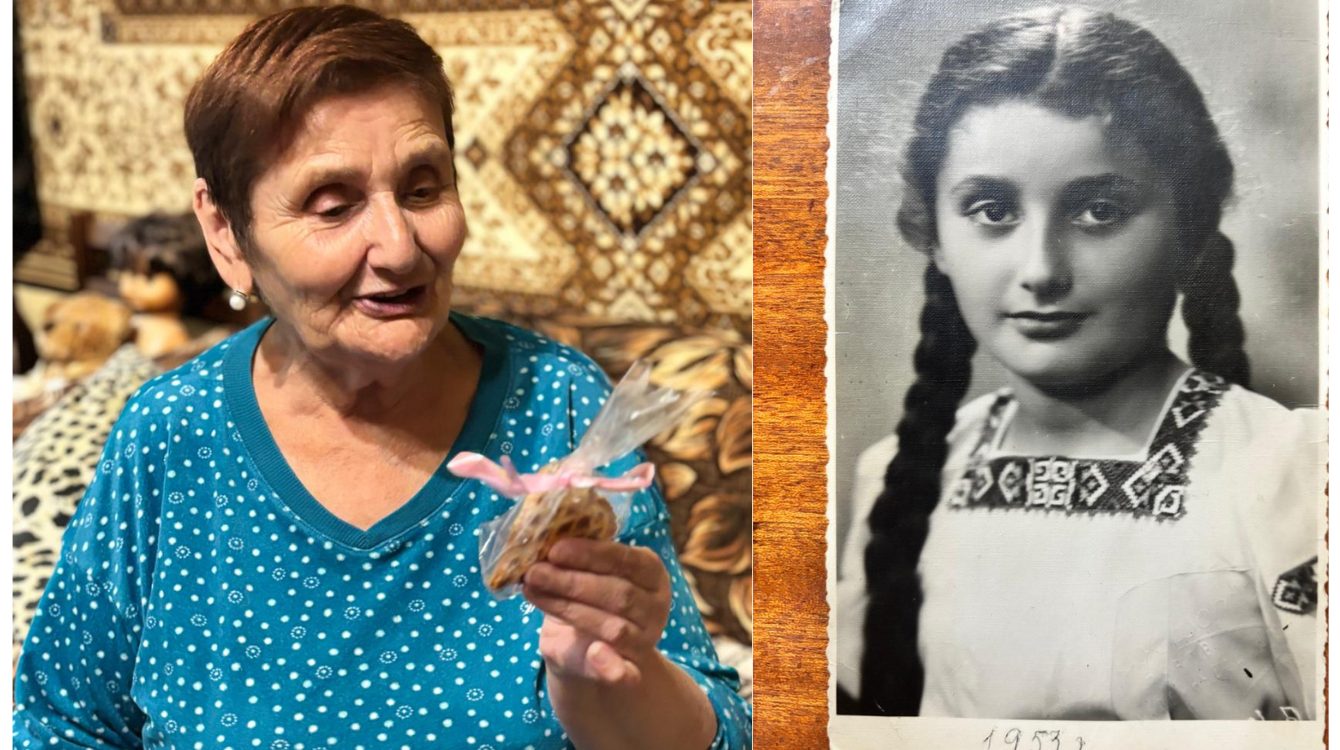
As we descend the steps to the Georgian restaurant Roman has chosen, everyone is already seated. Maxim, our violinist, has set the room vibrating with happy music, and in a moment, the drones and missiles are forgotten. One by one, they stand up to embrace us. Every single one of them is a Holocaust survivor in the stricter sense of the word. At some point, we sat with each of them in their tiny Soviet apartments to hear their tragic stories of how they were hidden in cellars and barns and cornfields or saw the slow death in ghettos. Sharing the most painful moments with each other has created such a deep heart connection that we now celebrate together in a whole different way. And what a celebration it is!
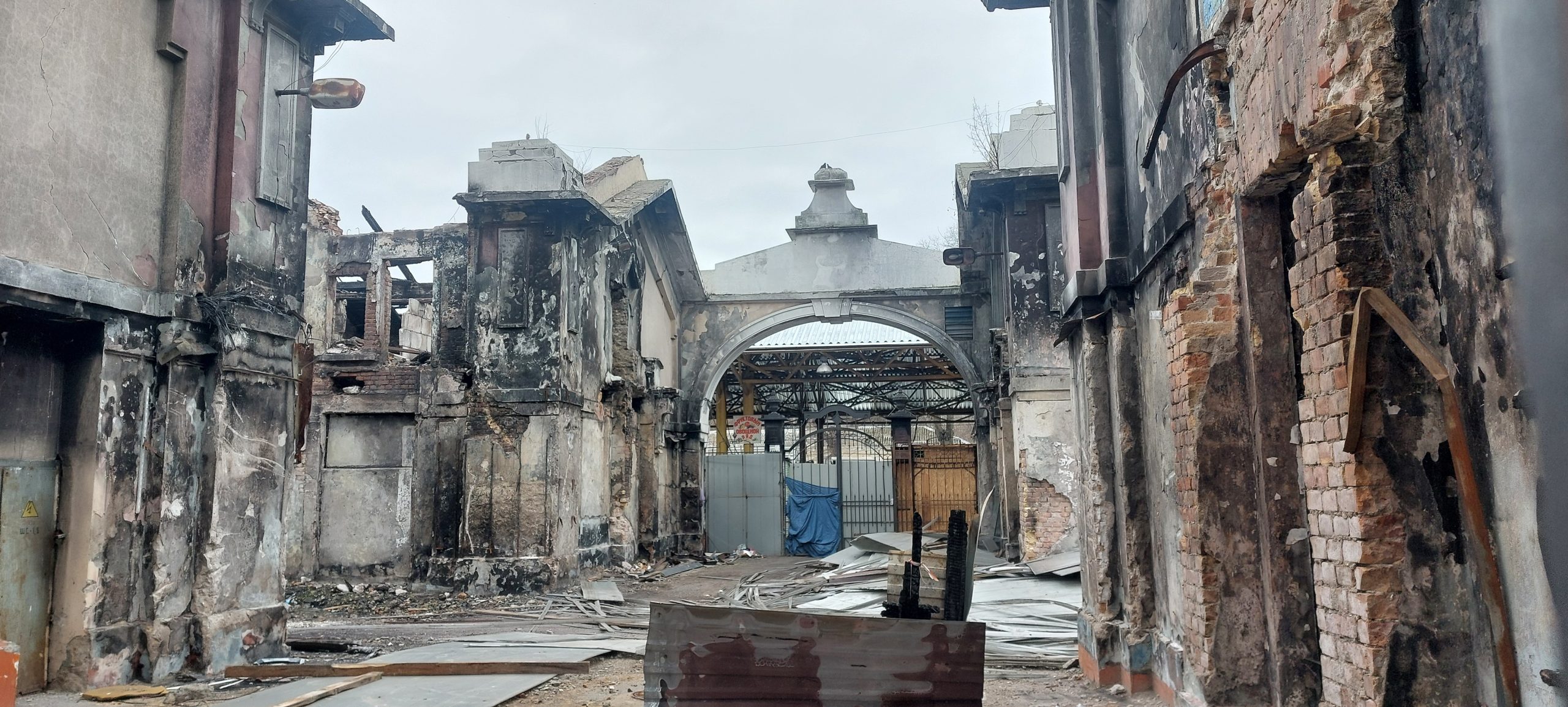
Destroyed part of the Privoz Market in Odessa. | Photo: C4I Ukraine
Celebrating in the midst of war
Roman has inquired at the synagogue he attends every Shabbat about a good restaurant where he can put his C4I budget to good use for a meeting with the survivors. Everyone knows each other there, and so it happens that Roman ends up at the Georgian restaurant “Khinkali,” whose Jewish owner charges him only the cost of ingredients. Accordingly, the long table is laden with food.
One platter after another is brought in, some standing on top of each other on the table. Is this excessive? No, it’s therapy, I realize, especially now. And it bears God’s signature.
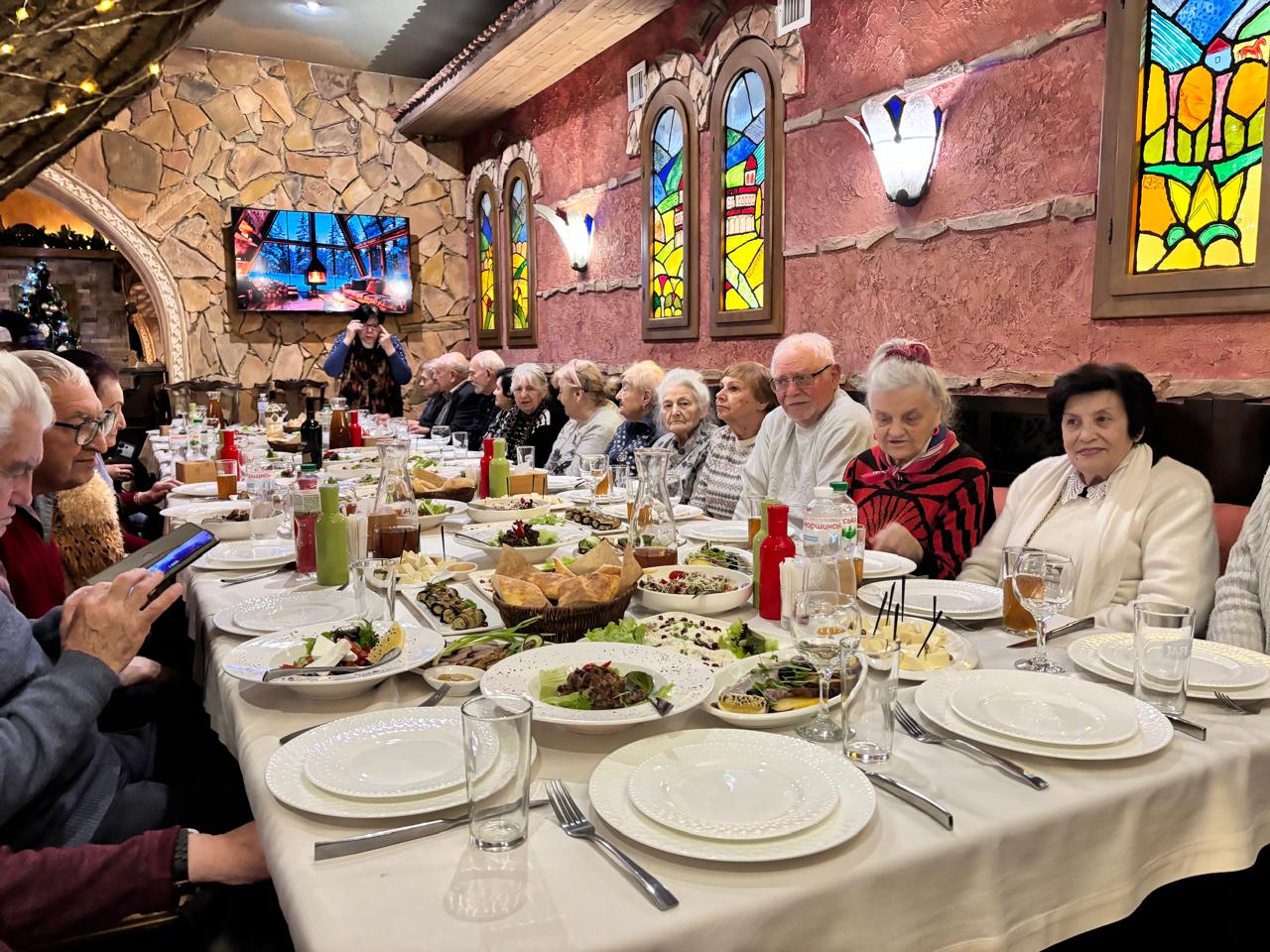
Delicious treats on the tables—an expression of love and comfort. | Photo: C4I Ukraine
“When I think of our childhood, how we were starving, and now I see this table—I’m overwhelmed!” says Svetlana for the whole group.
Then Maxim plays, and the survivors dance. Seeing them so happy is hard to put into words. It is a moment of heaven. God promised to dwell among His people, as today’s scripture says. It already begins here on earth, in the midst of war. His presence changes everything, and we are allowed to be His landing place.
In Odessa, we also invite the Jewish post-war children and, the next day, the Jewish seniors and survivors who fled from the nearly destroyed Black Sea city of Kherson. We stop at the small survivor community in Uman and, a few hours later, we are at the lighting of the second Hanukkah candle in Belaya Tserkov.
We visit Holocaust survivors at home in Vinnitsa, then we throw a big celebration in this city for all those who are still mobile. Finally, we make our way to western Ukraine to light the Hanukkah lights with the survivors of Lvov and the refugees from eastern Ukraine.
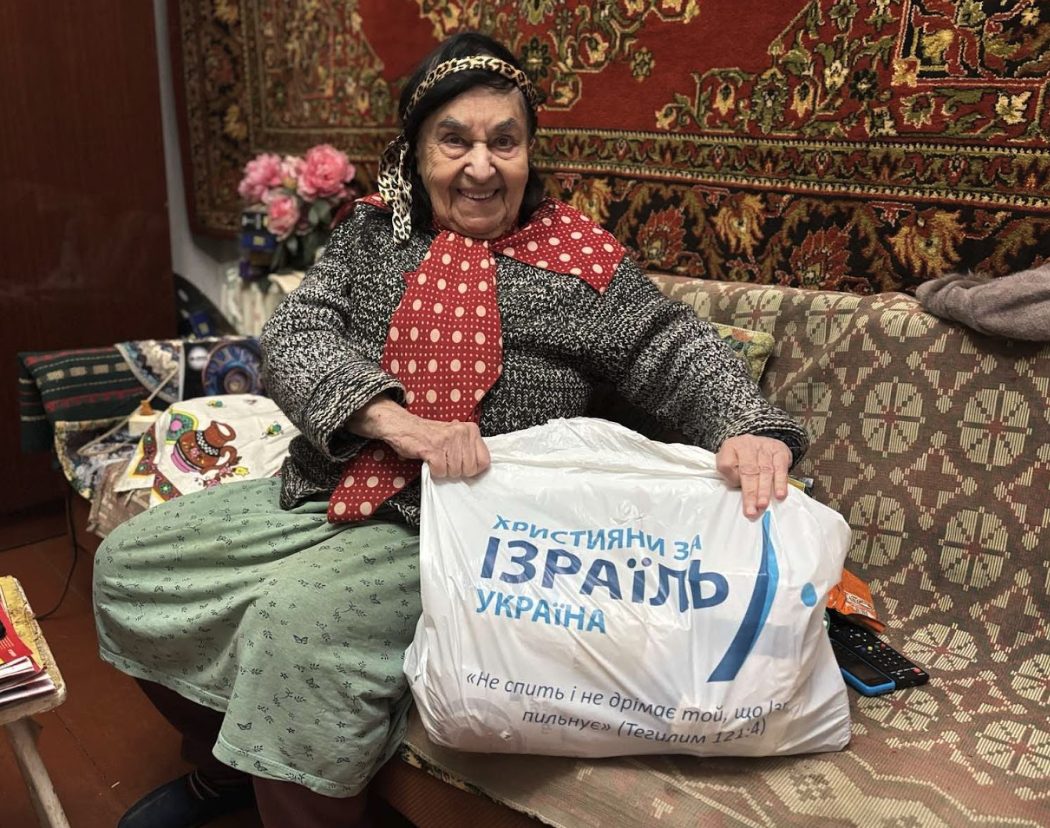
Thank you for making these divine moments possible! Thank you for allowing us to keep bringing the message to survivors in Ukraine that thousands of Christians pray for them and love them – with active hands and open hearts.

Why Israel? by Rev. Willem Glashouwer
Order the book