Experts grade Trump admin between A-minus, C-plus for protecting Jews on campus in first year

A year into U.S. President Donald Trump’s second term, experts are divided on how to grade the administration’s efforts to protect Jews on campus—an area that the White House and the U.S. Justice and Education Departments, among other agencies, have made a priority.
In 2025, Columbia University, Northwestern University and Cornell University agreed to pay $221 million, $75 million and $60 million respectively to settle federal probes over alleged Jew-hatred, and the Trump administration has sought $500 million from Harvard University and reportedly $1 billion from the University of California system, also for their responses to alleged antisemitism.
Rep. Tim Walberg (R-Mich.), chair of the House Education and Workforce Committee, told JNS that the president “has taken strong, decisive action to protect Jewish students and faculty on campus.”
“Republicans in Congress are also investigating university leaders for their failures to follow the law,” the congressman said. “I am glad Jewish students and faculty finally have a president who refuses to tolerate hateful, antisemitic harassment.”
Tal Fortgang, legal policy fellow at the Manhattan Institute, welcomes the administration’s “aggressive posture,” for which he would give it a B grade.
“Some of the problems that manifest on the surface as antisemitism are really deeper reflections of educational rot, and this administration has been right to target the sources of those rot,” Fortgang told JNS. “To the extent that policies are meant to spotlight and try to root out that rot, that is good and right.”
But it’s been a “mixed bag” when it has tried to implement and enforce those policies, according to Fortgang.
“The administration very prominently, to a lot of fanfare and controversy, sent those letters demanding massive changes from various institutions under the guise of fixing their antisemitism problems,” added Forgang, who holds a law degree and has published legal scholarship. “That’s not following the proper procedures of our civil rights law.”
The Trump administration has “abbreviated” and “short-circuited” the process, under which the federal government is supposed to allow schools the chance to reach voluntary resolutions to federal probes under Title VI of the 1964 Civil Rights Act, according to Fortgang.
“If they can’t agree, the administration can cut funding and file a lawsuit,” he told JNS.
Fortgang has heard anecdotal evidence “across the spectrum from ‘it’s made things better’ to ‘it makes things worse’ and mostly, ‘no difference,’” he said, of the treatment of Jews on campus..
“It remains to be seen whether this effort increases resentment against Jews in a kind of classical manner of, ‘Look at this special treatment these people are getting,’ when really it’s not special treatment at all,” he said. “It’s just enforcement of civil rights law in a way that people are not necessarily accustomed to seeing.”
Overall, the administration’s “hearts and minds are in the right place,” he told JNS. “It’s a matter of execution.” And, he said, there’s still “time to make moves, correct the mistakes they’ve made thus far and see through the effort that it seems to be committed to.”
‘Gutted’ education department
The Trump administration has exerted “unprecedented” pressure against universities, according to Miriam Elman, executive director of the Academic Engagement Network.
Its biggest success against campus antisemitism has been “keeping the focus on the fact that there is a problem here and it needs to be addressed,” which has led university leaders to talk “nonstop” with Jewish groups, like hers, about improving Jewish student experiences, Elman told JNS.
“We didn’t have that kind of intense focus on our community before,” she said.
The Trump administration has gotten Columbia and Harvard to say that “we have a problem in our Middle Eastern studies pedagogy” and that “we don’t have enough diversity of faculty appointments.” Many schools are improving their policies to stay out of the administration’s crosshairs, while some were already making those changes after being “horrified” by the anti-Israel encampments in 2024, according to Elman.
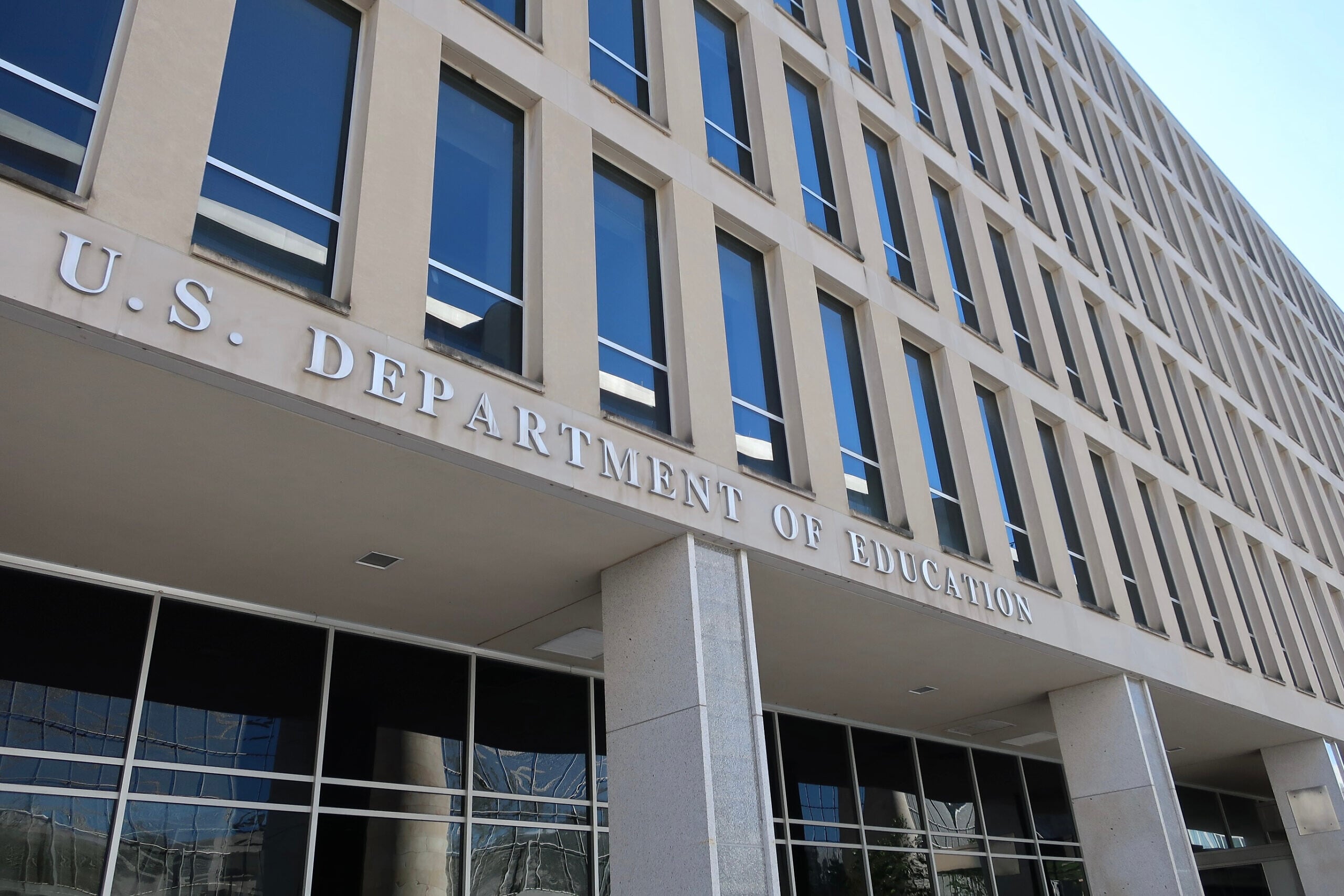
But Elman thinks that the administration “created a lot of difficulties actually for Jewish communities on campus” when it combined rooting out Jew-hatred with other political agenda items.
Title VI probes have historically been about the allegations, in this case about Jew-hatred, rather than about larger agendas, said Elman, who is concerned about the administration having “gutted” the Education Department, including its civil rights investigators.
“Will there be follow-up, and who is going to do the follow-up?” she said. She noted that follow-up on Jew-hatred probes was a problem under the Biden administration as well.
Gerard Filitti, senior counsel at the Lawfare Project, would give the administration an A-minus for “taking schools to task” for their handling of Jew-hatred.
“President Trump has done more than any previous administration to address antisemitism on college campuses,” he told JNS. “He directed the government to finally use Title VI and federal funding to force universities to take antisemitism seriously, and this has had the effect of making Jewish students feel safer.”
Filitti isn’t concerned, as Elman is, that the administration has cut too many civil rights investigators at the Education Department. He thinks the Justice Department could handle those probes.
“The issue, as it has always been, is adequate funding and having personnel to address all of these investigations in a timely manner,” he said. “This is something that President Trump can still do—is to augment that office, so that it can properly carry through investigations and enforcement actions.”
The next phase for the administration is enforcement, because “if these schools are learning that they can just sign agreements and revert to old habits, that deterrent effect disappears and Jewish students are less safe,” Filitti told JNS.
He cited reports that Columbia was not cooperating with the independent monitor overseeing compliance with the agreement and that the administration responded by replacing the monitor.
“That leads to a concern that these settlements are good on paper, but we need to see actual enforcement of them,” Filitti said.
He gave the Trump administration a C-plus for its enforcement of agreements.
The administration is eyeing some 60 colleges for possible action, and more colleges will work with it to change their policies and Title VI compliance, according to Filitti. “We expect to see much more coming in the coming year,” he told JNS.
Samuel Abrams, a nonresident senior fellow at the American Enterprise Institute and professor of politics and social science at Sarah Lawrence College, would give the administration a B-minus.
“While the intentions are good, the execution has not been great so far,” he told JNS.
For the most part, Jews are “ very happy with the statements and tone that the Trump administration has taken,” he said. “We’ve seen some shifts in how students are willing to speak about Israel because of Trump’s work and Harmeet Dhillon and all these other folks.” (Dhillon is assistant U.S. attorney general for civil rights.)
Abrams’ biggest concern is that “in many cases, we have not seen the action and the results that a lot of us were promised.”
He told JNS that students have told him that faculty leaders say at teach-ins and gatherings that “they will not be deterred, they’re not intimidated, they’re not uncomfortable and that they’re going to win—whatever that means—largely because they haven’t seen any action.”
“They’re not afraid of any sort of consequence,” he said.
Abrams would like to see more Title VI settlements, U.S. Equal Employment Opportunity Commission probes move more efficiently and more accountability for schools outside of elite institutions like Columbia and Harvard.
“As a professor who works with Jewish Zionist students all the time, they are still scared in a lot of cases,” he said. “They still feel very much under threat, and it’s hard for me to point to a government agency or someone that they can turn to and say, ‘Hey, we can get you some help here.’”
Abrams is willing to bump the administration up to an A-minus if it gets “a couple of big deal wins, where it’s unambiguously clear that the government, through various means, is holding schools and holding the faculty, the students, those who terrorize, harass, intimidate and threaten Jewish students and faculty and community members for simply being Jewish Zionists accountable.”
That could be via financial or oversight penalties, according to Abrams.
“If we begin to see that, very clearly and very plainly, that will send the necessary warning, and schools will stop behaving in the way that they have been,” he said.
The post Experts grade Trump admin between A-minus, C-plus for protecting Jews on campus in first year appeared first on JNS.org.
Why Israel? by Rev. Willem Glashouwer
Order the book