Israeli settlement sanctions: the intensifying battle for Jerusalem
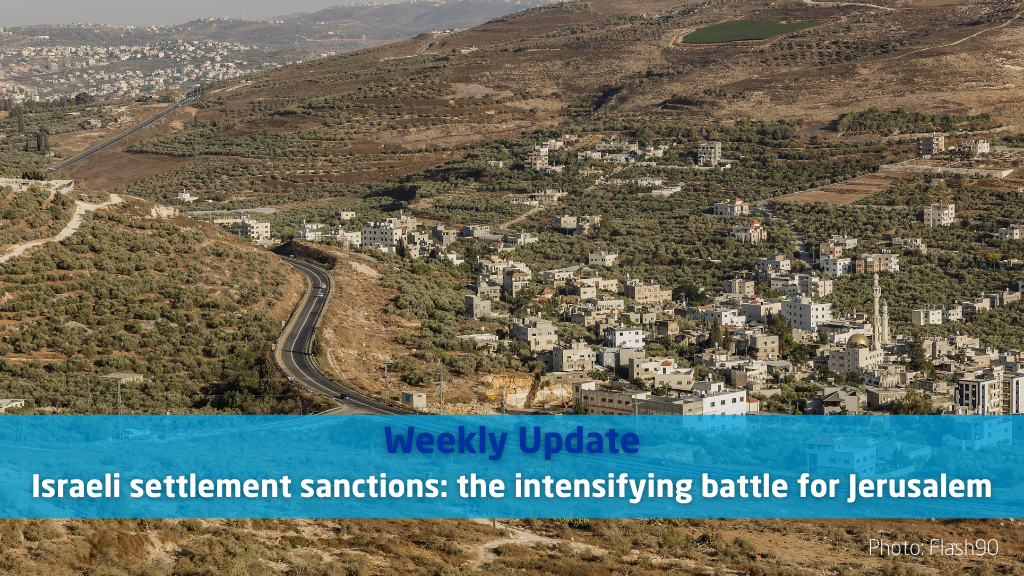
A large number of Western states are rallying to impose sanctions on trade in products from “illegal Israeli settlements”. What appears to be a political and legal conflict is in fact an intensifying spiritual battle for Jerusalem, that will lead to a major conflict between Israel and the nations. Like a volcano, pressure has been building up deep underground for decades – and now it is starting to erupt.
Trade bans
On September 8, twelve countries — the UK, France, Canada, Denmark, Finland, Iceland, Ireland, Norway, Poland, Portugal, Spain and Sweden —issued a statement jointly pledging to “introduce national and/or support European restrictions on trade in goods with settlements which are illegal under international law.”
Britain, France and Canada are the ones actually pulling the trigger: UK Foreign Secretary Ed Miliband announced a full import ban on settlement goods within nine months, paired with “action against specific companies and individuals” financing or building in the settlements, though he carved out exemptions for religious items and Israeli medicines. The other nine committed only to “support further action” — a hedge that leaves plenty of room for the coalition to fray before Britain’s own ban actually bites.
The twelve-nation statement — from Canada, Denmark, Finland, France, Iceland, Ireland, Norway, Poland, Portugal, Spain, Sweden and the UK — frames the restrictions as compliance with international law rather than punishment. It cites: settlements being “illegal under international law” (naming the E1 project specifically); actions “tantamount to the annexation of Palestinian land”; the “forcible displacement of the Palestinian population”; “unprecedented levels of settler violence and settlement expansion”; a need to “ensure accountability for settler violence, and investigate allegations against Israeli forces”; and alignment with “relevant UN Security Council resolutions” supporting a two-state solution with Palestinian statehood alongside Israeli security.
This builds on ground already shifting under Israel’s feet for a year. Spain banned settlement imports first, in September 2025, followed by Slovenia, Belgium, and now the Netherlands, which adopted a national ban that takes effect September 22, 2026, covering goods from the West Bank and Golan Heights, including intermediate trade by Dutch companies abroad.
Ireland’s Occupied Territories Bill — applicable to goods only, after the government stripped out services over its own legal analysts’ objections — cleared its final vote in July and awaits signature.
Israel’s response
It did not take Jerusalem long to answer. Israel closed the British consulate in East Jerusalem, pulled the UK out of the Gaza ceasefire support arrangements it had helped stand up, halted Palestinian Authority security training, and barred a dozen British parliamentarians from entry. Foreign Minister Gideon Sa’ar accused London and its partners of “stoking antisemitism”; on the British side, Reform MP Richard Tice called the sanctions a “grave mistake” that would embolden the very antisemitism Sa’ar warned of — a rare instance of an Israeli minister and a British opposition figure making the identical argument from opposite sides of the debate. The timing was not incidental: the announcement landed two days before Rosh Hashanah and seven weeks before Israel’s October 27 election, a scheduling choice several commentators read as designed to maximize both symbolic weight and domestic political sting.
The real issue: sovereignty
The main argument used to justify these trade bans is the International Court of Justice’s July 2024 advisory opinion, which found the occupation itself unlawful and said other states have a legal duty not to render aid or assistance to it. According to the ICJ, the reason the occupation is illegal is because the land, including “East Jerusalem”, belongs to the Palestinian people. The ICJ opinion is the legal hook most of these governments’ own lawyers, and outside groups like Amnesty and Human Rights Watch, point to as the basis for trade bans.
Who owns the land? A brief historical reflection
Ever since the 7th century BC, the land now known as “the State of Israel” and “the Palestinian territories” was governed by a series of foreign powers. The last empire was the Ottoman Turkish Empire, governed from Constantinople (Istanbul). That empire fell in WWI. The Allied Powers obtained control of the territory that had become known as “Palestine. The British were given the task by the League of Nations to enable the Jewish people to “re-establish their national homeland in Palestine”.
The British failed to reconcile Jewish and Arab claims. The result was a kind of civil war in Palestine. The British announced their intention to leave, handing “the Palestinian problem” to the UN. Not surprisingly, the UN was unable to solve the conflict. The conflict intensified in late 1947, and when the Jewish people declared the establishment of the State of Israel in May 1948, sovereignty of the land was in still dispute. That dispute was not resolved by the United Nations (which has no authority to resolve such disputes), nor has it been solved subsequently by any binding judicial decision or by any agreement between Israel and its hostile Arab neighbors. Israel itself did not define its own borders (the Declaration of Independence refers to “Eretz Israel”).
The Arabs continued to try to eliminate the Jews. After surviving several wars, Israel took full control of “the West Bank” (ie. Judea and Samaria) and “East Jerusalem” (ie. the Old City and the Holy Basin) when defending itself against Arab aggression in the Six-Day War in June 1967.
Since June 1967, Israel has exercised control but not asserted legal sovereignty over the territory that was previously part of the Mandate for Palestine and in 1948 occupied by Egypt (Gaza) and Jordan (the old city of Jerusalem, and Judea and Samaria).
Israel’s confusing policies since 1967
Instead of asserting full sovereignty, Israel has since 1967 taken various measures in these territories. Among the most important:
- Israel united the whole city of Jerusalem in June 1967, bringing it under Israeli law and jurisdiction and declaring it to be the “indivisible capital of the State of Israel” (but not officially claiming sovereignty over it);
- Israel introduced a military administration over the remainder of the “West Bank” – partly because some in Israel believed it was required to do so as an “occupying power” under international law; partly as a means to control Palestinian terror; and partly as a tactic to negotiate peace with the Arab world, in the hope that conceding land will bring peace (“land for peace”);
- At the same time, Israel has since 1967 enabled and encouraged Israelis to live in the “West Bank” – some of whom (or their forebears) owned land there, and had been forcibly removed by Egypt or Jordan; and
- in the 1990s, conceding to international pressure, Israel entered into the Oslo Accords with the Palestinian Liberation Organization (PLO) – promising the Palestinians autonomy, but (so far) refusing to enable or recognize a Palestinian state.
This rather confusing mix of policies is a reflection of deep differences of opinion, within Jewish society and across the non-Jewish world, about the status of the land.
Different views about sovereignty
At the risk of over-simplification, ever since 1948 there have been basically two main categories of views – both within Israel and around the globe.
On the one hand, many (not all) in Israel and in the Jewish community and their allies around the world hold the view that the Jewish people have a right to live in the land of their ancestors (after all, they argue, Abraham, Isaac, Jacob and their descendants, and the kingdoms of Israel and Judah, were all located in the land that the world now calls “East Jerusalem” and “the West Bank”). Some of these people believe it is a Biblical right, others regard it as a historical, political and/or legal right.
Opposing them are those (numerically, the majority of people in the world) who reject (or are ignorant of) the Jewish connection with the land and believe that “the Palestinians” are the rightful owners of this land. The latter group includes some who claim that the only way to solve the conflict is either to create a Palestinian state in the “occupied” territories, or to dismantle Israel and replace it with a single, democratic “State of Palestine”.
The whole spectrum of approaches is represented in Israel – which is why Israeli elections have been so complicated, and why official Israeli policies have been so confusing and contradictory over the decades.
To this day, lawyers around the globe continue to debate the question. There is no consensus. Even in the International Court of Justice, there is a range of views. According to the Court’s Vice-President, Judge Sebutinde, the legal principle normally applicable in such situations (“uti possidetis juris”) means that in 1948 Israel “inherited” as borders the administrative boundaries of Mandate Palestine.
This conflict concerning sovereignty of the land is not just about the “occupied” territories; it is about the whole of Palestine, “from the river to the sea” – the territory that in WWI was allocated to the Mandate for Palestine.
At the center of this land – literally – is the city of Jerusalem.
Israeli and Palestinian/Arab positions on sovereignty
It may come as a surprise to some readers that while Israel asserts its right to allow Israelis to live in the territories under military administration, it does not officially claim sovereignty over Jerusalem, Judea or Samaria.
Israel’s position is still that, while it has historical claims, sovereignty of the “occupied territories” has been “in a vacuum” since 1922. According to Israel, the question of sovereignty of the land can only be resolved through negotiations. Israel mainly argues that its control of the “occupied territories” is justified by security demands.
In contrast, the Palestinians and their supporters (the Arab/Islamic world, and even some Western states) hold a very strong position: they assert that the Palestinian people have FULL SOVEREIGNTY over ALL of the territories of Mandate Palestine. And their opinion is now supported by the highest court in the world: the International Court of Justice.
For decades, Israel has tried to manage these tensions by means of compromise: implementing a range of different administrative measures at different times reflecting different governments and perspectives, while avoiding the underlying question of sovereignty.
But Israel’s policy of obfuscation has backfired – it has weakened Israel’s negotiating position, given fuel to its enemies around the globe, confused the public, and enabled Islamist extremism to take root in Palestinian society.
The tension is now coming to a head. Islamist aggression and violence (especially the horrors of October 7th) requires the Israeli government to increasingly exercise military power and assert Israel’s historical and legal claims. This assertiveness is in turn provoking a backlash – both within Israel and around the world.
Since October 7th 2023, opinions within Israel and broader Jewish diaspora have shifted significantly. Not surprisingly, there is a growing view in Israel that the whole idea of Palestinian statehood is untenable, and that Israel must be much more assertive in defending the secure existence of the Jewish State – even if this means preventing the Palestinians from having a state. This may now even be the majority view in Israel (the upcoming elections will tell).
This is in fully fledged conflict with the overwhelming majority of UN member states. Totally oblivious to the fact that Palestinian society has been deeply infiltrated by the violent, satanic hate-filled ideology of radical Islamism, both Islamist as well as most Western states now reject the argument that Israel’s military presence in Gaza and the West Bank is justified by security concerns.
Sooner or later, it seems the Israeli government will have to either assert full sovereignty over these territories, or abandon its claims to the territories and withdraw the Israelis living there.
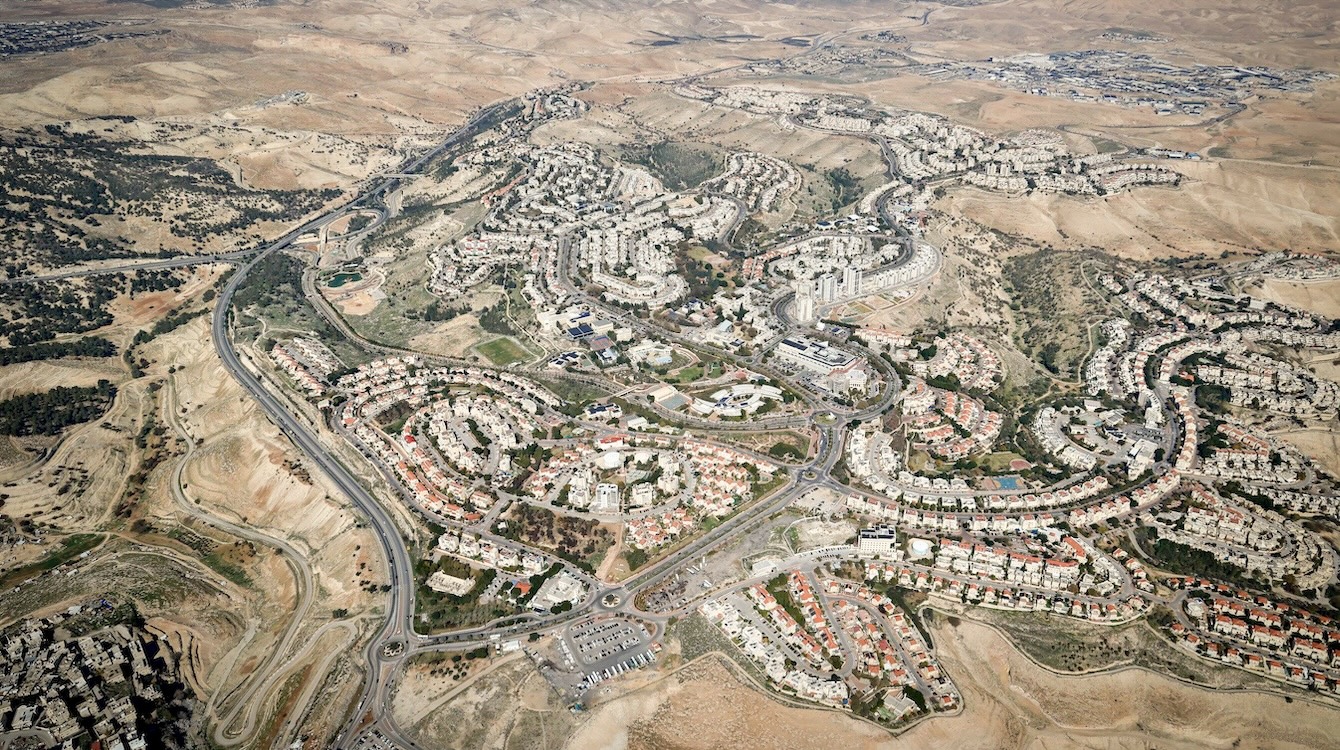
One option that has been discussed in recent years has been to assert Israeli sovereignty over Area C (about 70% of the West Bank), leaving Areas A and B under Palestinian authority. Of course, this will not appease the international community, nor will it bring peace with the Palestinians.
Israel could, of course, simply maintaining the status quo: avoiding the complex issue of sovereignty, and continuing military campaigns to destroy Iran and its proxies and allies such as Hezbollah and Hamas in the occupied territories and in Lebanon. But that has become unacceptable to most UN member states, including many Western states that have been traditional allies of Israel.
The current round of trade bans is a sign that even Israel’s traditional allies, such as Germany, have had enough. They will not assist Israel militarily, and they will impose increasingly harsh measures to force Israel to remove its military and citizens from the “occupied territories”. Logically, this will, in time, lead to military action against Israel if it does not comply.
Interestingly, the current Israeli government has recently explained its historical and legal right to the land in more assertive language than previously. For example, Israel’s Foreign Minister Gideon Sa’ar explained this week why Israel is so angry at the UK’s latest move:
“The Jewish people have the right to live throughout the Land of Israel. The connection and right of the Jewish people to this land are documented more extensively than those of any other people in human history. The move by the Labour Government in Britain is particularly absurd given that, more than a century ago, it was the Balfour Declaration of the British Government that formally recognised the historic right of the Jewish people to re-establish their national home in the Land of Israel, including in Judea and Samaria. This declaration served as the foundation for the British Mandate, was recognised by the League of Nations, and was subsequently incorporated into Article 80 of the United Nations Charter.”
It will be interesting to see how this develops. The question of how to deal with sovereignty of the “territories” will be one of the central issues in the upcoming Israeli elections next month.
Any move by Israel to assert or claim full sovereignty outside the Green Line will be perceived as “annexation”, which is illegal under international law. It will further ignite the wrath of the nations, leading possibly to a Security Council resolution calling for military action against Israel.
And of course, if it asserts sovereignty, Israel must also resolve the thorny question: what status to give the Arab-Palestinian population in the West Bank?
Much will depend on what happens in the United States. For the time being, the US Administration is backing Israel’s right to remain in the territories and to exercise full military force against Hamas and other Islamist jihad entities. But this could all change in the coming months and years.
These are not easy questions. One thing is clear: avoiding the thorny question of sovereignty will not bring peace.
How are we, as Christians, to respond to this?
The Bible gives us some guidelines on how we are to view the conflict. Without pretending to be exhaustive, here are some suggestions:
- On the one hand, the Bible states clearly that the Lord has given the land to the Jewish people as an eternal possession, and that He will bring His people back to the land after their dispersion amongst the nations. From the perspective of the Bible, the Jewish people have a “right” to the land, and an obligation to live in, and cultivate, the land to which the Lord is bringing them home.
- However, the right to the land brings a responsibility with it. The Jewish people have not only a right to live in the land; they also have a responsibility to exercise sovereignty over it. Sovereignty includes exercising mercy towards the strangers (ie. non-Jews) in the land and administering justice. The administration of the land is to be, as it were, an example to the nations of godly justice and righteousness.
- Sovereignty also entails the responsibility to use the necessary force to confront and eradicate evil and hostile elements in society. This is, of course, a huge challenge, when the majority of non-Jews in the territories currently under Israeli military administration have a deep hatred towards the Jewish people, and are even willing to sacrifice their own children to kill Jews and destroy the Jewish nation.
- This is a dilemma that is unique to Israel, and unique in history.
- The nations, from a Biblical perspective, face a choice – whether they submit to, or oppose, the Lord’s sovereign purposes in bringing the Jewish people home. Many nations are governed by leaders whose attitude towards Israel is shaped by a religion (Islam) which does not (and cannot) tolerate Jewish sovereignty over Islamic land.
- The church is the body of those who have been included in God’s eternal covenants with the people of Israel; we have been included in “the commonwealth of Israel” (Ephesians 2). We have an important role to play in this critical time of world history.
- What should we do? Our task is not to think up political “solutions” to the conflict. That is the job of governments, not the church. The role of the church is to speak prophetic truth into our nations, with love; to comfort the Jewish people in their difficult journey back to the heart of the Father; to strengthen our Christian brothers and sisters in the land; and to pray unceasingly to the Father in the Spirit, for the coming of the kingdom: “Hallowed be Thy name. Thy kingdom come, Thy will be done, on earth as it is in heaven”.
Prayer
Pray for Israel and her leaders, that as nations turn from words to action, wisdom would guide them — to answer one-sided treatment with clarity, and to speak truth while also reaching out in friendship and building allies across the globe.
Pray that in the upcoming elections, the people of Israel will elect leaders who will have the courage to confront evil, and assert full sovereignty over the land entrusted to the Jewish people – so that all who live in the land will be blessed.
Pray for the enemies of the Jewish people, especially in the Islamic world – that hearts of stone will be turned to hearts of flesh.
Pray for Arab Christians in the land, both in Israel and in the disputed territories – that they will be filled with love for the Jewish people, be peace-makers in a hostile environment, and have “the mind of Christ”.
Pray for the leaders of the nations, that they will have the humility to recognize that the restoration of the Jewish people to the land is God’s sign that He alone is Lord over the whole earth.
And pray that the Church will rise to its calling – to speak truth in love into the nations, comfort the Jewish people, and intercede in the Spirit.

The ferocious campaign against Netanyahu
Fiamma Nirenstein at JNS: As Israelis prepare to vote on Oct. 27, the political battle over the Israeli prime minister’s responsibility is becoming a central election issue.
> Read more..
France leads 11 other nations calling for sanctions against ‘settlement’ goods
JNS: Same-day news coverage of the 12-nation announcement, naming each participating country and the scope of the pledge.
> Read more..
UK sanctions on Judea and Samaria ‘shameful,’ ‘not helpful,’ Danon says
JNS: Israel’s UN Ambassador Danny Danon’s response to the British ban, arguing “the British Mandate of Palestine is over.”
> Read more..
EU ministers fail to reach deal on sanctions targeting Judea-Samaria towns, Sa’ar says
JNS: Coverage of the July 2026 Brussels meeting where EU foreign ministers could not agree on a bloc-wide sanctions package, per Israeli Foreign Minister Gideon Sa’ar.
> Read more..
Ireland approves bill banning imports from Israeli communities in Judea and Samaria
JNS: Report on Ireland becoming the first EU member state to enact a comprehensive import ban, while noting the law’s limited economic impact.
> Read more..
From Anne Frank to anti-Jewish Sanctioning: The Netherlands’ Betrayal of Israel
Gatestone Institute: Wim Kortenoeven’s opinion piece arguing the Dutch settlement-goods ban continues a historical pattern of Dutch antisemitism.
> Read more..
EU Sanctions Israel, Welcomes Taliban
Gatestone Institute: Daniel Greenfield’s opinion piece contrasting the EU’s sanctions on settler organizations Regavim and Nahala and activist Daniella Weiss with its outreach to the Taliban.
> Read more..
SCRIPTURE FOR THE WEEK: Zechariah 14:1-9
A day of the Lord is coming, Jerusalem, when your possessions will be plundered and divided up within your very walls. I will gather all the nations to Jerusalem to fight against it; the city will be captured, the houses ransacked, and the women raped. Half of the city will go into exile, but the rest of the people will not be taken from the city. Then the Lord will go out and fight against those nations, as he fights on a day of battle. On that day his feet will stand on the Mount of Olives, east of Jerusalem, and the Mount of Olives will be split in two from east to west, forming a great valley, with half of the mountain moving north and half moving south. You will flee by my mountain valley, for it will extend to Azel. You will flee as you fled from the earthquake in the days of Uzziah king of Judah. Then the Lord my God will come, and all the holy ones with him. On that day there will be neither sunlight nor cold, frosty darkness. It will be a unique day—a day known only to the Lord—with no distinction between day and night. When evening comes, there will be light. On that day living water will flow out from Jerusalem, half of it eastto the Dead Sea and half of it west to the Mediterranean Sea, in summer and in winter. The Lord will be king over the whole earth. On that day there will be one Lord, and his name the only name.
Why Israel? by Rev. Willem Glashouwer
Order the book