The Underside of the Tapestry
The World May Look Like a Mess, but God is in control
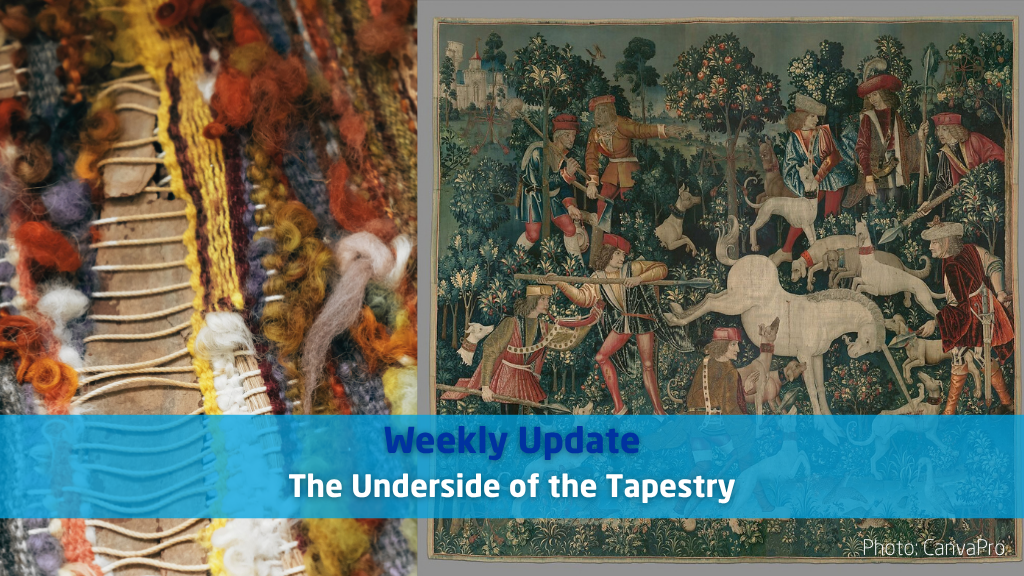
Corrie ten Boom, whose family hid Jews in Haarlem and paid for it with their lives, explained this by using the metaphor of a tapestry. Corrie used to hold up a piece of embroidery with the back facing her audience. It showed knots, loose ends and tangled dark threads. Then she turned it over to reveal a crown. We see the underside, she said, but God sees the pattern He is weaving.
This week the underside of the tapestry looks like a mess. The UN has celebrated Durban’s legacy while more than 40 nations stayed away. Twelve countries are imposing sanctions on settlement goods. Talks over the Strait of Hormuz have stalled, the Palestinian Authority tells the UN it has reformed while the evidence says otherwise, and Israel heads into an election on October 27 under threat. None of it looks like a design.
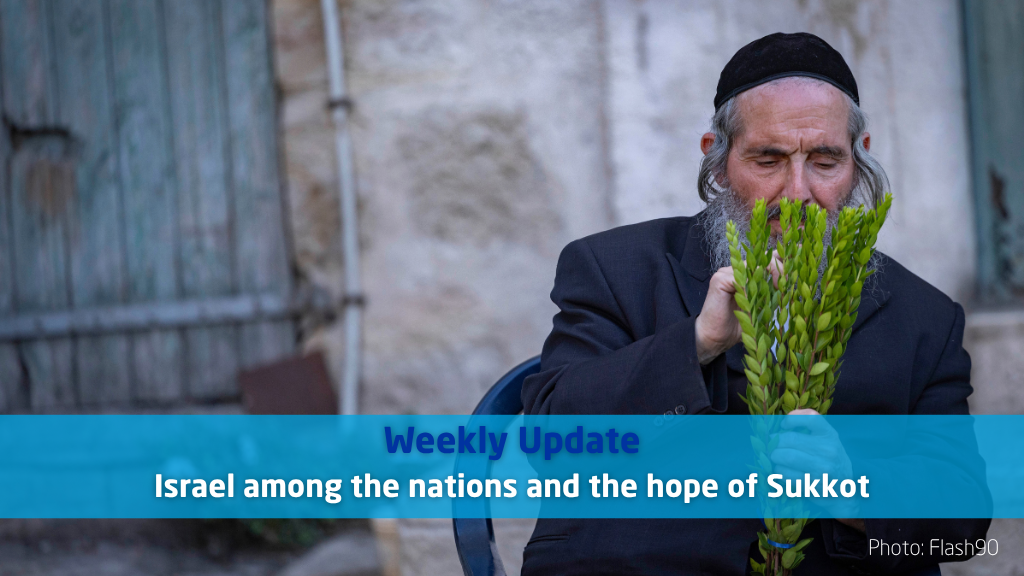
The upper side of the tapestry shows God’s pattern. The Jewish people are celebrating the Feast of Tabernacles. Jews around the world are now sitting in fragile structures (sukkah), which remind them that God sheltered their ancestors in the wilderness when nothing else did. This reminds us that God who promised that Israel would last as long as the sun and moon (Jeremiah 31:35-37) has not dropped the threads. “Now we see in a mirror dimly, but then face to face” (1 Corinthians 13:12).
“I will bless those who bless you”
Genesis 12:3
Durban at 25: Celebrating a Conference That Weaponized Anti-Racism Against the Jews
On September 28, the UN General Assembly held a high-level meeting in New York to mark 25 years since the 2001 Durban Declaration and Programme of Action. Its theme, “Mobilizing Global Public Support for the Full and Effective Implementation” of the Durban text, and a political declaration reaffirming the original, made plain that the UN was not reviewing Durban but celebrating it. More than 40 countries stayed away, up from 38 at the twentieth anniversary in 2021. Israel’s UN ambassador Danny Danon summed up their message: “antisemitism should not be celebrated, and hatred of Israel should not be legitimized under the guise of fighting racism.”
Why boycott a document against racism? Writing during the Days of Awe in Dispatches from the Ship of the Wise, Gregory Lafitte traces the answer to 1975, when General Assembly Resolution 3379 declared Zionism a form of racism. Warnings came from every continent. Britain said it risked “bringing this whole organization into disrepute”; Ethiopia called the equation “inconceivable”; Zambia feared it would undermine the fight against apartheid. America’s Daniel Patrick Moynihan saw the deepest danger: corrupt the language of human rights, “the only language by which the small can be defended,” and the vulnerable lose their means of appeal. The resolution was repealed in 1991, but, as Lafitte puts it, “Repeal is not repair.”
Durban is where the poison resurfaced. Israel and Jewish NGOs were shut out of the preparatory meeting in Tehran, and early drafts spoke of “holocausts” in the plural and likened Israeli policy to Nazism. The parallel NGO Forum branded Israel a “racist, apartheid state” guilty of “acts of genocide,” demanded the return of Resolution 3379 and called for South Africa-style isolation of the Jewish state. Young Jewish activists found themselves pushed out of the anti-racist cause because of their attachment to Israel. The United States and Israel walked out. The final government text stepped back: it remembers the Holocaust and condemns antisemitism. Yet it was never purged of the framework that made Israel the one conflict singled out, and the NGO declaration was never repudiated.
That is why a reaffirmation is, in effect, an endorsement. The Durban playbook of stretching words like “apartheid” and “genocide” until they deliver the condemnation sought was written 22 years before October 7, 2023, and it is being replayed today. With South Africa’s case against Israel still before the International Court of Justice, Ireland has asked the court to “broaden its interpretation” of genocide, which Lafitte calls “a repetition of 1975 in legal form.” To reaffirm Durban without reckoning with any of this is to bless the method that turned anti-racism into a weapon against Jewish dignity.
Lafitte does not ask the world to abandon the fight against racism. He asks for a new declaration that “confronts racism in all its forms and rejects antisemitism unequivocally.” He also appeals directly to African and Caribbean nations: “antisemitism must never be advanced in your name.”
The Days of Awe teach teshuvah, and Maimonides defines true repentance as facing the same situation again and choosing differently. On September 28 the UN faced Durban again. It chose repetition.
Seven Days to Reopen Hormuz: Trump Says No
Seven months into the war with Iran, the Strait of Hormuz remains the pivot of the conflict. At the UN General Assembly last week, Iranian Foreign Minister Abbas Araghchi, who met US envoys Steve Witkoff and Jared Kushner on September 23 through Qatari mediation, unveiled a seven-day plan. If Washington agreed to a ceasefire on all fronts including Lebanon, lifted its naval blockade of Iranian ports, removed oil sanctions and released frozen assets, Iran would reopen the strait “at the end of the seventh day” and peace talks would resume, with nuclear discussions to follow.
President Trump dismissed it the next day. “I’d like to make a deal, too,” he told reporters outside the White House on September 26. “But that deal would not be acceptable.” He later denied offering Tehran any sanctions relief: “I offered them NOTHING!” The sticking point is sequencing. Iran wants the pressure lifted first and the nuclear question left for later, while Washington insists any agreement must address the nuclear programme. Trump says Iran is “failing very badly” and that “Iran will not have a nuclear weapon.”
Tehran is not softening. Parliament Speaker Mohammad Bagher Ghalibaf warned that “in a region where we do not sell oil, no one will sell oil, and if our security is not ensured, no infrastructure will be safe.” The Revolutionary Guards spoke of an “irreversible Iranian order” over the strait. On September 28 a ship was hit by a suspected projectile while passing through it, and on September 29 the US Treasury sanctioned ten more suppliers to Iran’s military. Iran’s rial has fallen past 2.5 million to the dollar.
Indirect talks continue, and a US official described them as “positive and constructive.” For Israel, which goes to the polls on October 27, the stakes are clear. Prime Minister Netanyahu says there are “indications” that enemies will attempt attacks before the election.
“Reforms Are Complete”: Can the UN Take Abbas at His Word?
Addressing the UN General Assembly on September 24, Palestinian Authority President Mahmoud Abbas said his government had “completed the national reform program.” He claimed stronger “transparency, accountability, the fight against corruption, and the rule of law,” a welfare system “based on need,” schools reformed “in accordance with international standards,” and a firm rejection of terrorism. As Khaled Abu Toameh shows for Gatestone, the evidence says otherwise.
Take “pay-for-slay.” The PA says it has replaced payments to terrorists and their families with means-tested welfare. Yet the US State Department put the 2025 payments at $156 million. In April 2026 the State Department found the PA still runs “a system of compensation in support of terrorism through new mechanisms and under a different name,” and the European Commission acknowledged in November 2025 that the payments had not stopped. According to Bassam Tawil, PA television itself has admitted that the health system is “on the verge of collapse.” The money is being found for terrorists regardless.
Schools and the rule of law tell the same story. IMPACT-se found Palestinian textbooks “substantively unchanged,” still promoting “jihad and martyrdom” and the “glorification of terrorism” and rejecting peacemaking. The monitoring group Lawyers for Justice recorded 219 violations by PA forces in 2025, including 26 cases of torture and arbitrary arrests of journalists, teachers and activists.
Then there is the promise of a Palestinian state with “one weapon and without militias.” Ahead of legislative elections set for November 28, Abbas is pursuing reconciliation with Hamas and Palestinian Islamic Jihad, groups that openly reject those terms. Tawil argues that the elections are mainly a gesture to Western donors.
Governments now recognizing a Palestinian state are relying on these assurances. The PA’s record suggests that at the UN, the words change while the conduct stays the same.
What does this mean for Christians?
The Bible does not leave Christians neutral about God’s people Israel. Paul warns Gentile believers, “do not be arrogant toward the branches… it is not you who support the root, but the root that supports you,” for “the gifts and the calling of God are irrevocable” (Romans 11:18, 29). God’s covenant with Israel will last as long as the sun, moon and stars (Jeremiah 31:35-37). How we treat the Jewish people matters: “I will bless those who bless you” (Genesis 12:3). And Jesus rebuked those who could not interpret “the signs of the times” (Matthew 16:3). Like the men of Issachar, the Church must have “understanding of the times” (1 Chronicles 12:32).
When we look at the underside of the tapestry, we see the modern State of Israel that was established in 1948. It is a secular state, whose citizens include Jews and non-Jews. From a worldly perspective, the history of the modern State of Israel is messy and confusing.
But when we look at the upper side of the tapestry, we see God’s purposes with the world through Biblical (spiritual) eyes. “Israel” in the Bible refers to the descendants of Jacob (who was renamed “Israel” after wrestling with God: Genesis 32:28). Today, we normally call them “the Jewish people” (the word “Jew” derives from “Judah”, one of Jacob’s sons and the term used to refer to the two tribes Judah and Benjamin). God is bringing His people home, as a sign and warning to the nations.
The point is that we should see beyond the secular world to understand the spiritual reality of God’s eternal dealings with His covenant people.
Our task is not to understand every thread but to keep praying, to keep standing with Israel, and to trust the Weaver.
Prayer
Pray for Israel and her leaders, that in a week of tangled threads they would look beyond the knots of diplomacy, sanctions and war to the God who keeps covenant.
Pray that the Lord will lead His people with wisdom as the October 27 election in Israel nears.
Pray for the enemies of the Jewish people, from the halls of the UN to the rulers in Tehran, that the dark threads they weave would be turned by God’s hand toward repentance and peace.
Pray for the peace of Jerusalem, for Israelis and Palestinians alike, and for all who are weary of a pattern they cannot see.
And pray for the speedy coming of the Messiah of Abraham, Isaac and Jacob, when the Weaver will turn the canvas over and every thread will be shown to have had its place.
‘UN to mark 25th anniversary of South Africa’s Durban Conference criticized for antisemitic rhetoric
“Durban was not a fight against racism, but a platform for antisemitism and hatred of Israel,” said Israeli ambassador to the UN Danny Danon.
‘Iran threatens to attack Mideast infrastructure after Trump dismisses Hormuz proposal
Tehran awaiting ‘final US response’ from mediators to its demands for truce, end of blockade, and sanctions relief as preconditions for nuclear talks; Russia says Iran should stay in NPT
Palestinian Authority President Mahmoud Abbas Tells the UN: Reforms Are Complete. The Evidence Says Otherwise
President Mahmoud Abbas presented an extraordinarily positive picture of the reforms he claims his government has carried out. According to Abbas, the PA has fulfilled the commitments it made to the international community.
SCRIPTURE FOR THE WEEK: Jeremiah 31:35-40
35 This is what the LORD says, HE who appoints the sun to shine by day, who decrees the moon and stars to shine by night, who stirs up the sea so that its waves roar- the LORD Almighty is his name: 36 "Only if these decrees vanish from my sight," declares the LORD , "will the descendants of Israel ever cease to be a nation before me." 37 This is what the LORD says: "Only if the heavens above can be measured and the foundations of the earth below be searched out will I reject all the descendants of Israel because of all they have done," declares the LORD . 38 "The days are coming," declares the LORD , "when this city will be rebuilt for me from the Tower of Hananel to the Corner Gate. 39 The measuring line will stretch from there straight to the hill of Gareb and then turn to Goah. 40 The whole valley where dead bodies and ashes are thrown, and all the terraces out to the Kidron Valley on the east as far as the corner of the Horse Gate, will be holy to the LORD . The city will never again be uprooted or demolished."
Why Israel? by Rev. Willem Glashouwer
Order the book